Most owners in Larnaca think damp is a paint problem. It isn't. Damp proofing in Larnaca is a diagnosis problem — the stain you can see is almost never where the water is actually getting in, and until someone traces it back to the source, every coat of paint, every filler, every optimistic repaint is buying you a few dry months and nothing more.
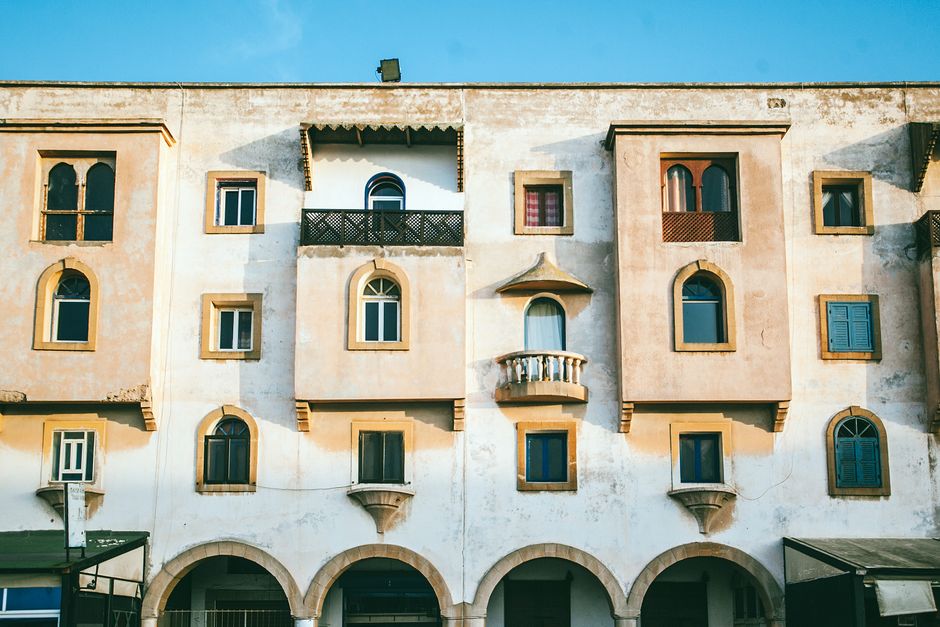
That's the part the local trade rarely says out loud. So let's say it properly.
Key takeaways
The short version, before we go deeper:
- Damp in Larnaca is a diagnosis job first, a repair job second — the visible symptom is rarely the entry point.
- Salt-laden coastal air, thin concrete cover and long dry spells followed by hard rain make local buildings unusually good at hiding moisture damage.
- Left alone, damp quietly attacks rebar, plaster, insulation and finishes long before it looks serious.
- We diagnose the real source, write a clear specification, document defects in insurer-ready reports, and oversee vetted contractors on site.
- Every job is backed by a 10-year workmanship guarantee, across Larnaca and island-wide.
What damp actually is, and what it isn't
Damp is not a stain. Damp is movement — water finding a path it was never meant to take, through a material that was never meant to carry it. The stain, the bubble, the salty bloom on the skirting: those are the exit wounds. The wound itself is somewhere else, sometimes a few metres away, sometimes a whole floor up.
In Larnaca specifically, we see three broad families of the same underlying issue. Water rising from the ground into walls and slabs that were never properly isolated at the base. Water pushing sideways through facades, parapets and window reveals because the envelope was never fully sealed. And water sitting on flat roofs and terraces long enough to find the one weak joint it needs. All three look like a paint problem from inside the room. None of them are.
If you want the deeper picture of how this behaves in local homes, we've written about damp and leaks in Cyprus villas — the pattern repeats across property types.
Why Larnaca punishes buildings harder than owners expect
Larnaca has a specific climate personality, and it's unkind to unprepared buildings.
The coastal air is loaded with chloride. That salt drifts inland, settles on facades and roofs, and works its way through microscopic pores in the concrete. Once it reaches the steel reinforcement inside, the corrosion clock starts — quietly, invisibly, years before anything shows on the surface. Damp is the accelerant. A wet, salty wall corrodes far faster than a dry, salty one.
Then there's the build stock. A large share of Larnaca's residential and mixed-use buildings went up quickly, in concrete, with thin covers to the steel and waterproofing treated as an optional extra rather than a design layer. Balconies cantilever out with barely any fall. Parapets sit on cold joints that were never properly detailed. Terraces get tiled directly over slabs with no continuous membrane beneath. Any of that is survivable in a mild year. None of it is survivable indefinitely.
And then there's the rain pattern. Long, dry, dusty months where nothing seems wrong — followed by the first serious November downpour arriving all at once. That first rain finds every defect the summer politely hid. Owners call us the week after, every year, like clockwork.
The quiet cost of leaving it alone
This is where owners tend to underestimate the situation, so it's worth being direct.
Damp doesn't just stain walls. It softens plaster until it detaches in sheets. It saturates insulation and destroys its thermal performance, so the room that used to hold its temperature suddenly can't. It travels along the underside of slabs and emerges two rooms over. It rusts the steel inside your concrete, and rusting steel expands — which cracks the concrete from the inside out, which lets in more water, which rusts more steel. That loop has a name in this trade, and none of it is polite.
On a villa, the cost surfaces as ruined finishes, a permanent musty note in the guest suite, and a resale conversation you didn't want to have. On an apartment building or complex, it surfaces as a facade that starts shedding fragments, balconies that fail inspection, and a committee meeting that gets very tense very quickly. On a premium property with high-end joinery, natural stone, or bespoke plaster, it surfaces as five- and six-figure remedial work that was entirely avoidable.
The common thread: every one of those outcomes started as a small damp patch someone decided to repaint.
Reading the warning signs before they become invoices
Before diagnosis, most owners already have enough evidence to know something is wrong. They just haven't connected the dots. Here's a working guide.
| Warning sign you can see | Likely underlying cause | Area we inspect first |
|---|---|---|
| Tide-line stain low on an internal wall, salty deposits at skirting | Rising damp through an unprotected base or failed ground-level seal | Ground-level junctions, basement and sub-structure interfaces |
| Dark patch high on an external wall, worse after wind-driven rain | Penetrating damp through the facade, reveal or parapet | Walls and facades, window and door reveals, parapets |
| Ceiling stain directly under a flat roof or terrace | Membrane failure, blocked drainage, or a compromised upstand | Roofs and flat roofs, terraces and verandas |
| Bubbling paint on a balcony soffit, rust streaks below | Water sitting on the balcony above, reaching the steel inside | Balconies, exposed concrete, slab edges |
| Damp ring around a pool coping or planter | Failed detail at the wet-zone interface | Swimming pools, planters, wet rooms |
| Musty smell in a basement or garage that never quite dries | Moisture ingress through sub-structure walls or slab | Basements, sub-structures, ground-level areas |
Useful reading if any of these describe your property: rising damp in Larnaca, penetrating damp in Larnaca, and what a specific drip is usually telling you.
Not sure which one you have?
That's the whole point of the site visit. You can also get an instant estimate to see the order of magnitude before we come out.
How WATERPROOFED.cy actually resolves it
This is where we differ from a general contractor with a bucket of coating and an optimistic day rate.
We diagnose the source, not the symptom. Before anything is specified, we walk the property, inspect the affected areas and the areas the owner hasn't noticed yet, and trace the moisture back to where it's genuinely entering the envelope. Sometimes that's exactly where you expected. Often it isn't. The stain on the bedroom ceiling turns out to be a failed parapet detail six metres away. The wet patch on the ground-floor wall turns out to be a planter above it that's been quietly draining into the structure for years. Diagnosis is the work. Everything after it is execution.
We write a proper specification. Once the cause is identified, we specify the correct approach for your specific situation — the correct approach for a coastal flat roof is not the correct approach for a basement wall, and neither is the correct approach for a balcony soffit. We select the best-suited method for the area affected, the exposure, the substrate and the way you use the space. We do not have a favourite product we apply to everything. That's how buildings end up back on our schedule three years later, and we're not interested in that.
We document every defect in a report you can actually use. Written properly, with photographs, locations and the technical reasoning behind the diagnosis. Owners use these reports with insurers. Committees use them with residents. Buyers' lawyers ask for them during due diligence. If you're going to spend money fixing your building, you should also have the paperwork that proves what was wrong and what was done about it.
We oversee vetted contractors on site. We don't hand you a specification and wish you luck. The right method executed poorly is still a failure — and waterproofing is unusually punishing about detail. Overlap widths, upstand heights, junction treatments, curing conditions: these are the things that decide whether the work lasts a decade or a season. We supervise the crews we've worked with for years, and we sign off the work ourselves.
Every job is backed by our 10-year workmanship guarantee. That guarantee exists because of the four things above, not in spite of them. We can stand behind the work for a decade because we controlled the diagnosis, the specification, the crew and the execution. Nobody guarantees a job they didn't oversee — and we don't ask you to trust anyone who does.
We work across Larnaca, Limassol, Paphos, Nicosia, Ayia Napa and Polis, on villas, mansions, apartment buildings and complexes. Coastal exposure is our default assumption, not a special case.
What the site visit looks like, in practice
One visit, usually a couple of hours depending on the size of the property. We inspect the affected zones and the related envelope areas — roof, facade, balconies, ground-level junctions, wet rooms, anywhere water could be entering or migrating from. We ask about the history: when it started, what the weather was doing, what's been tried before. Then we give you an honest read.
Sometimes the honest read is that you have a single, contained defect and a straightforward fix. Sometimes it's that the envelope has multiple failing details and the sensible path is a staged plan. Either way, you'll know what you're dealing with, in writing, with the reasoning attached. If you also want the roof context specifically, this piece on roof leak repair in Larnaca is worth ten minutes.
Book the diagnosis, not another repaint
If you've read this far, you already suspect the damp in your property isn't going away on its own. It isn't. Every dry month is the building hiding the problem, not solving it — and the first hard rain of the season will find it again.
Book a site visit and we'll come and diagnose it properly, in person, with a written report at the end. If you'd rather start with a rough sense of scope, get an instant estimate on the homepage, or message us on WhatsApp and we'll take it from there. Either way, you get the diagnosis, the specification, the oversight, and the 10-year workmanship guarantee — for Larnaca, and for the rest of Cyprus.
One building. One correct fix. Done properly, once.