WATERPROOFED.cy

Mould removal, mould inspection & damp remediation · All Cyprus

Black mould removed
at the source.

2 min · WatchWhy your leak keeps coming back

Mould is never the problem — it is the symptom. For €100 + VAT we inspect the property, measure the moisture, and hand you a written report: the cause, the fix and the price.

€100 credited back against any work — you risk nothing.VAT excluded and comes in addition to the price.

  • 10-year written workmanship guarantee
  • Get protected and preserve property value
  • On-site within 7 days · report in 72 hours
  • Specialists on site, not just contractors
5.0Scandinavian founded company

One price, no games

€100 + VAT for a full mould & damp inspection — credited back against the works.

Moisture readings, thermal imaging, photographic documentation and a written report with a fixed price. If you proceed, the €100 comes off the job — so an honest diagnosis costs you nothing.

Mould removal Cyprus

Kill the growth. Then kill the cause.

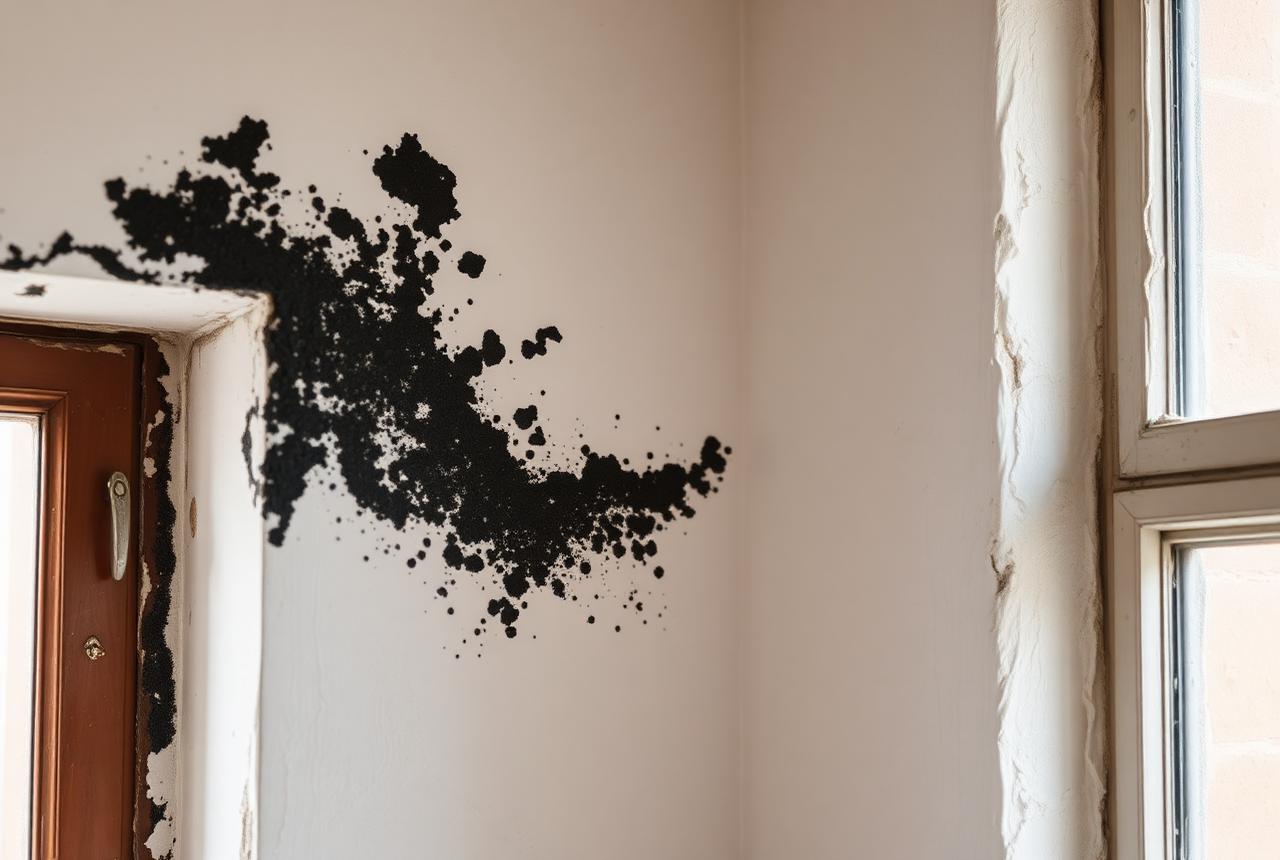
Black mould spreading across a damp interior wall in a Cyprus villa

Mould in a Cyprus property is almost never a hygiene problem. It is a building problem. Every colony on a bedroom wall, in a bathroom corner, behind a wardrobe or across a basement ceiling is growing because a surface stayed wet long enough for spores — which are present in every building on the island — to germinate. Remove the growth and leave the moisture, and it will be back before the next season.

We are waterproofing specialists first, which is exactly why owners call us for mould. Finding water is what we do every day: failed roof membranes, cracked terrace details, bridged damp-proof courses, untanked basements, leaking pool lines, condensation on uninsulated concrete frames. Mould removal without that diagnosis is redecoration with a shelf life.

So we start with a €100 + VAT inspection. A specialist attends the property, measures moisture at surface and depth, thermal-images the cold zones, logs humidity, photographs everything and writes it up. You receive a report that names the cause, specifies the remediation and quotes a fixed price — whether you use us for the works or not. If you do proceed, the €100 is credited back.

From there we can carry the whole job: containment and safe removal, biocidal treatment, structural drying, the waterproofing or plumbing repair that stops the water, replastering in salt-resistant systems, and a breathable anti-mould finish. One contractor, one written specification, one workmanship guarantee — with up to 10 years on core waterproofing scopes.
Know what you are looking at

Six signs your property has a mould and damp problem.

01

Black spots on bedroom and bathroom walls

The classic condensation signature: dark speckled growth in corners, around window reveals and behind wardrobes where warm humid air meets a cold surface. It wipes off — and it returns every winter until the cold bridge and the ventilation are corrected.

02

A musty smell that never leaves

Smell is the earliest reliable indicator. Mycelium growing inside wall buildups, under laminate flooring or within ceiling voids produces a distinctive earthy odour long before anything is visible on the surface.

03

Tide marks and salt bands low on the wall

A horizontal band of discoloured, blown or crumbling plaster within a metre of floor level, sometimes with white crystalline salts. That is rising damp drawing groundwater and dissolved salts up through the masonry.

04

Ceiling staining under a terrace or bathroom

Brown-edged patches on a ceiling almost always mean a failed waterproofing detail or a plumbing leak above. Mould follows the water, so remediation without fixing the slab above is money burned.

05

Peeling paint and bubbling plaster

Coatings fail when moisture pushes out from behind them. If paint lifts in sheets or plaster sounds hollow when tapped, the substrate behind it is wet and very likely colonised.

06

Allergy symptoms that improve when you leave the house

Persistent sinus irritation, coughing, itchy eyes or asthma flare-ups that ease when you are away from the property are a strong signal of an indoor spore load — even where growth is hidden.

Why it happens here

Mould in Cyprus has six usual suspects.

The island's climate is deceptive. Long dry summers convince owners that damp is a northern European problem, then a humid coastal autumn and a wet winter arrive, buildings with almost no thermal insulation cool down overnight, and moisture condenses on every cold concrete element in the house. Add construction detailing built for heat rather than water, and the pattern becomes very predictable.

Condensation and cold bridges

Cyprus homes are built for heat, not for winter humidity. Uninsulated concrete beams, columns and window reveals stay several degrees colder than the surrounding wall, so moisture in the air condenses on them first. Add closed shutters, drying laundry indoors and a bathroom without working extraction, and the relative humidity in a bedroom can sit above 70% for weeks. That is all mould needs.

Sealed-up, unoccupied properties

Holiday homes and rental villas are shut for months at a time. With no air movement, the property becomes a humidity trap: moisture evaporating from concrete, soil and pool areas has nowhere to go. Owners return to blackened wardrobes, spotted ceilings and a smell that has soaked into soft furnishings.

Failed waterproofing and active leaks

Flat roofs, terraces, balcony thresholds, planters, pool shells and basement walls are the four biggest sources of chronic wetting we see in Cyprus. Once water is inside the buildup it stays there — insulation and screed hold litres of it — and it keeps feeding growth long after the visible drip has stopped.

Rising damp and missing damp-proof courses

Older stone and block properties, and plenty of newer ones built on tight coastal plots, either never had a damp-proof course or have one that has been bridged by later render, paving or landscaping. Groundwater climbs the wall by capillary action, bringing salts that keep the plaster permanently hygroscopic.

Plumbing and drainage defects

Slow leaks behind bathroom tiling, failed shower-tray seals, corroded embedded pipework and blocked terrace outlets rarely announce themselves. They show up as a stain, a smell, or an unexplained mould patch in an adjoining room.

Air-conditioning and ventilation faults

Blocked condensate drains, poorly sited split units and bathroom extractors venting into a ceiling void rather than outside all deposit water inside the building. These are cheap to correct once identified — and completely invisible until someone measures.

The €100 + VAT inspection

What you actually get for €100.

Most contractors will give you a free "look" and a verbal opinion, then quote for whatever they happen to sell. We charge €100 + VAT because a proper diagnosis takes instruments, time and someone who has seen a thousand Cyprus buildings fail. You keep the report either way, and the fee comes off the job if you appoint us.

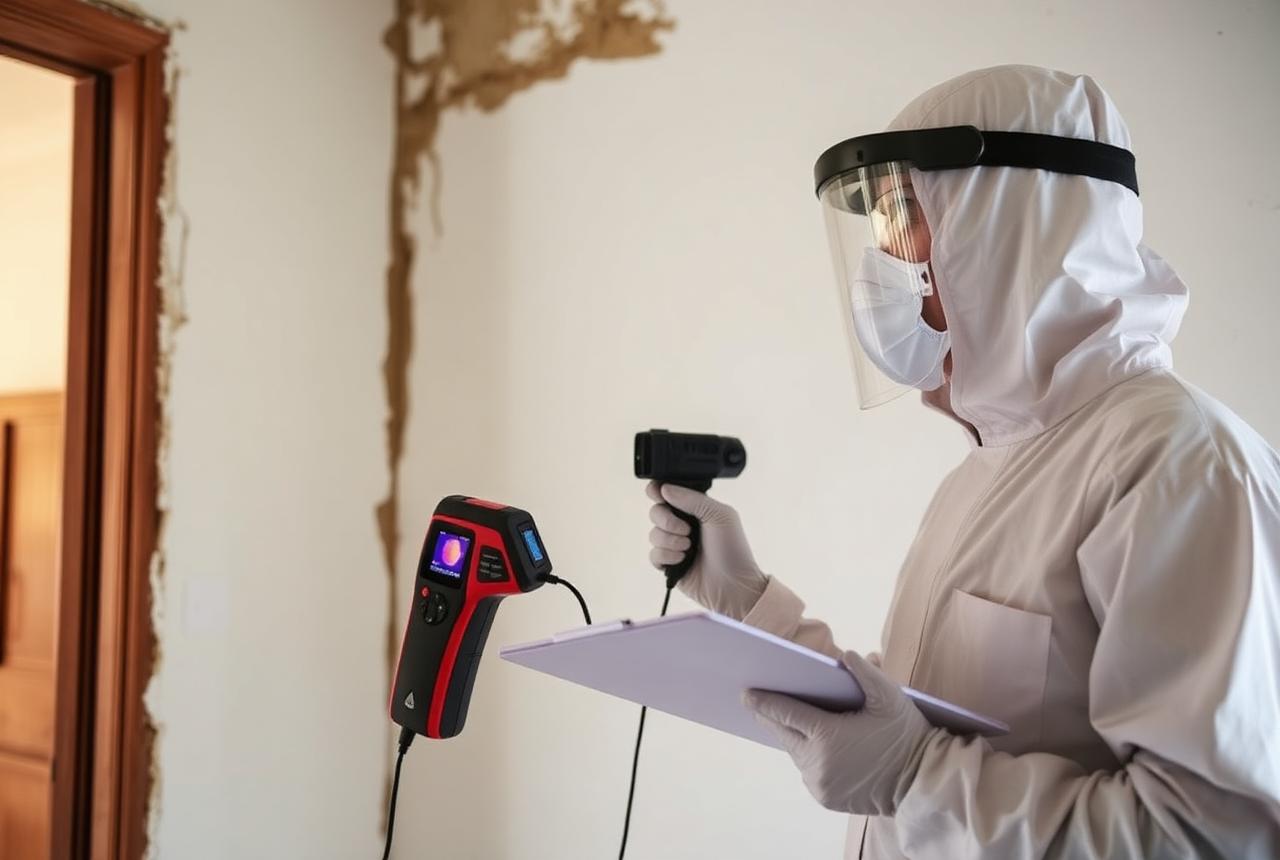
Specialist carrying out a mould and moisture inspection with a thermal camera in a Cyprus property
  • Room-by-room visual survey of every accessible surface, including behind furniture and inside wardrobes
  • Surface and deep moisture readings with calibrated meters — not guesswork
  • Thermal imaging to locate cold bridges and hidden wet zones inside walls and ceilings
  • Relative humidity, air temperature and dew-point readings for each affected room
  • Identification of the moisture source: condensation, rising damp, penetrating damp, leak or flood residue
  • Photographic documentation of every affected area, referenced in the report
  • A written report with the diagnosis, the recommended remediation and a fixed price per scope
  • Prevention advice specific to your property — ventilation, insulation, drainage and maintenance

The report is yours to keep, share with a surveyor, a buyer, an insurer or another contractor. We would rather you make an informed decision than a fast one. Want a rough budget before you book? Use the cost calculator.

Remediation process

Seven steps from spores to a finished room.

  1. 01

    €100 + VAT inspection

    A specialist surveys the property with moisture meters and thermal imaging, identifies the source and issues the written report with a fixed quotation. Credited back against the works.

  2. 02

    Containment & protection

    Affected rooms are sealed, negative pressure and HEPA filtration are set up where needed, and floors, furniture and adjoining spaces are protected before anything is disturbed.

  3. 03

    Safe removal of contaminated material

    Colonised plaster, coatings, sealant, skirting, plasterboard and insulation are removed and bagged. Dry-brushing and HEPA vacuuming prevent spores from being released across the property.

  4. 04

    Biocidal treatment & drying

    Substrates are treated with fungicidal systems, then force-dried and dehumidified until meter readings confirm the wall is genuinely dry — not just dry to the touch.

  5. 05

    Fix the moisture source

    The roof detail, balcony threshold, tanking, injected damp-proof course, plumbing repair or ventilation upgrade is carried out. This is the step most contractors skip — and the reason mould returns.

  6. 06

    Rebuild & anti-mould finishes

    Salt-resistant renovating plasters, insulated boarding at cold bridges where appropriate, then breathable anti-mould coatings. The room is handed back finished and decorated.

  7. 07

    Verification, photo file & guarantee

    Final moisture and humidity readings, a complete photographic file of every hidden layer, and your written workmanship guarantee for the scopes we performed.

Types we treat

Six kinds of mould problem — six different fixes.

Treating every case the same way is why so many owners are on their third mould contractor. The remediation that solves condensation will do nothing for rising damp, and the treatment that solves rising damp is irrelevant when the real source is a failed roof above.

Condensation mould

The most common type in Cyprus apartments and villas. Surface growth on cold walls, ceilings, reveals and behind furniture. Treated with a combination of cold-bridge insulation, humidity-controlled extraction and anti-mould finishes.

Rising damp with mould

Low-level growth accompanied by salt bands and blown plaster. Requires injected damp-proof course, removal of contaminated plaster to a specified height, salt-resistant render and external ground-level correction.

Penetrating damp

Water driven through façades, parapets, window surrounds and rendered walls by wind-driven rain. Fixed with façade repair, crack treatment and breathable water-repellent coatings rather than internal patching.

Leak-driven mould

Growth caused by a defined defect: a failed roof membrane, a leaking terrace, a bathroom, a pool line or a pipe. The waterproofing or plumbing repair is the real fix; remediation follows it.

Post-flood contamination

After storm ingress or a burst supply, materials stay saturated far longer than owners expect. Structural drying, removal of wet insulation and full reinstatement is the only reliable route.

Hidden void mould

Growth inside suspended ceilings, dry-lined walls, under laminate flooring and behind fitted wardrobes. Detected by smell, thermal imaging and moisture mapping before any surface is opened.

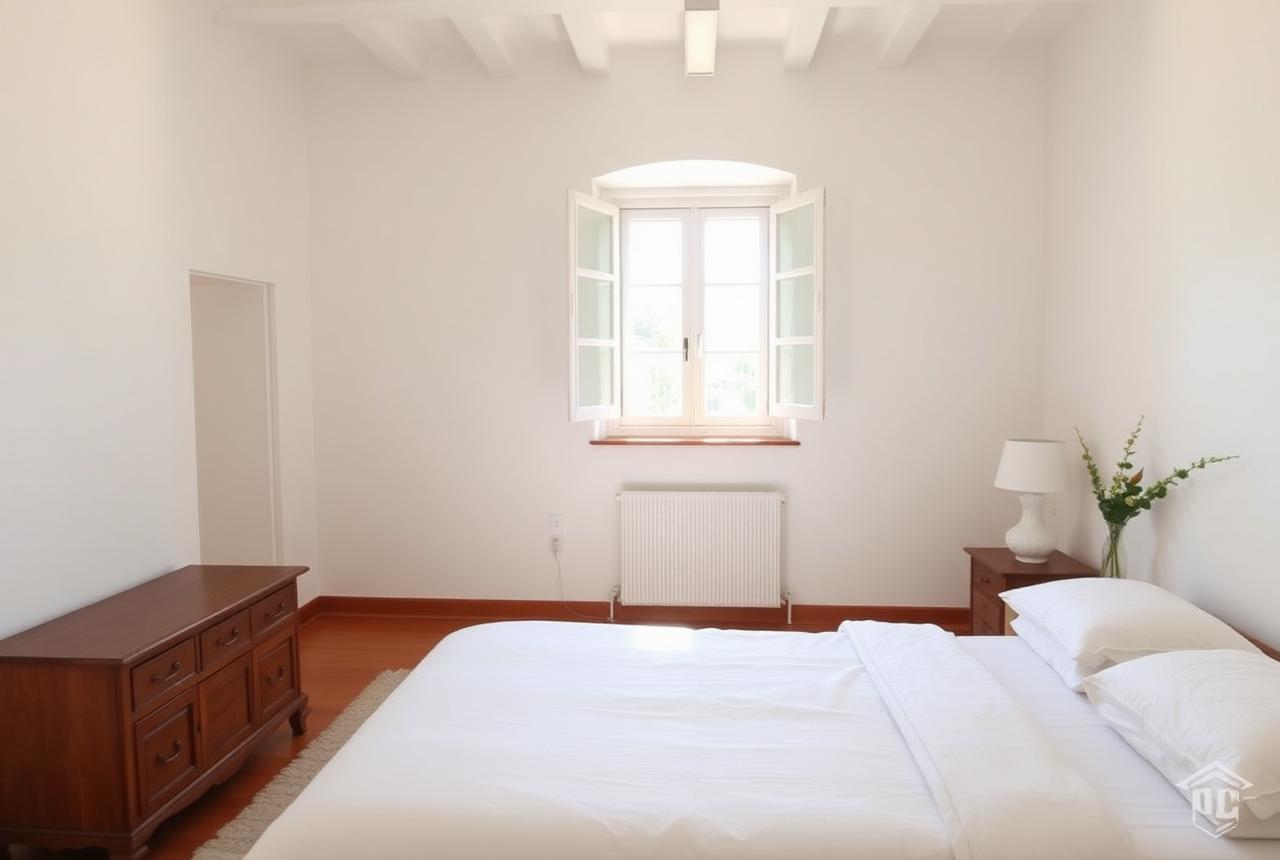
Clean, dry bedroom in a Cyprus villa after professional mould removal and redecoration

Health & property value

Two reasons not to live with it.

Health. Airborne spores and the compounds mould releases are consistently linked to coughing, wheezing, sinus irritation, headaches and worsened asthma — and the impact is greatest on children, older residents and anyone with a compromised immune system. If symptoms improve when the family is away from the property, that is worth investigating properly.

Property value. Damp staining and visible mould are among the first defects a buyer's surveyor records, and they trigger price reductions and retentions far larger than the cost of the repair. A documented remediation — report, photographs of every hidden layer, warranty certificate — turns a liability into a selling point.

There is also the quiet damage nobody prices: wet insulation loses its performance, timber and joinery decay, plaster blows, embedded steel corrodes, and finishes fail two years after they were paid for. Fixing the moisture once is always the cheaper path.

Who we work for

Every property type on the island.

  • Villas and family homes
  • Holiday and rental properties
  • Apartment blocks and complexes
  • Basements and underground garages
  • Hotels, guesthouses and Airbnb units
  • Offices, clinics and retail units
  • Traditional stone village houses
  • New builds with construction moisture

Prevention

How to stop mould coming back.

  • Ventilate closed-up properties — even 20 minutes of cross-ventilation daily changes the moisture balance in a house.
  • Fit humidity-controlled extract fans in bathrooms and kitchens, ducted outside rather than into a ceiling void.
  • Keep relative humidity between 40% and 60%; a €15 hygrometer per floor tells you when you have a problem.
  • Clear terrace and balcony outlets before every winter — blocked drainage is the single most common cause of ceiling mould below.
  • Leave a gap between furniture and external walls so air can move across the coldest surfaces.
  • Correct external ground levels and paving that bridge the damp-proof course at skirting height.
  • Have the roof, parapets and balcony thresholds checked every few years — long before staining appears inside.
  • Never paint over active mould; you trap the moisture and lose the early warning sign.

Where we work

Mould removal & inspection in every town in Cyprus.

Same €100 + VAT inspection, same written report, same guarantee terms — whether the property is a cliff-top villa in Paphos, an apartment in Limassol, a village house in the Troodos foothills or a rental unit in Protaras. Pick your area below for local detail.

Mould FAQ

Questions owners always ask.

  • €100 + VAT, anywhere we operate in Cyprus. A specialist attends the property, takes moisture and relative-humidity readings, thermal-images the cold spots, photographs every affected area and issues a written report naming the cause, the correct remediation and a fixed price. If you proceed with the works, the €100 is credited back against the job — so the diagnosis effectively costs you nothing.

Before the next winter

Find out what is really feeding the mould — for €100 + VAT.

Written report, fixed price, credited back against the works. Then one contractor removes the growth, fixes the source and puts the room back — under our written workmanship guarantee.

WhatsAppBook inspection