On a villa above Latchi last winter, the owner pointed at a fresh brown halo on the living room ceiling and asked where the roof was leaking. The roof was fine. What gave the failure away was three metres outside, on the south facade: a hairline crack running diagonally beneath a first-floor window, and directly below it a pale, chalky bloom in the render no bigger than a hand. Salt efflorescence. The wall had been drinking quietly for two seasons, and the ceiling stain was simply the moment the wall ran out of places to hide it.
That is the shape of most water leak repair in Polis. By the time you can see it inside, the failure has been working outside for a long time.
Why Polis hides its leaks longer than it should
Polis sits in a particular kind of weather. Long, dry, intense summers that bake renders and bituminous details until they go brittle. Then the first proper rain of November arrives in one bad night and finds every fatigued joint at once. Add the Akamas wind pushing salt-laden air inland, and you have a coast that ages building envelopes faster than the calendar suggests.
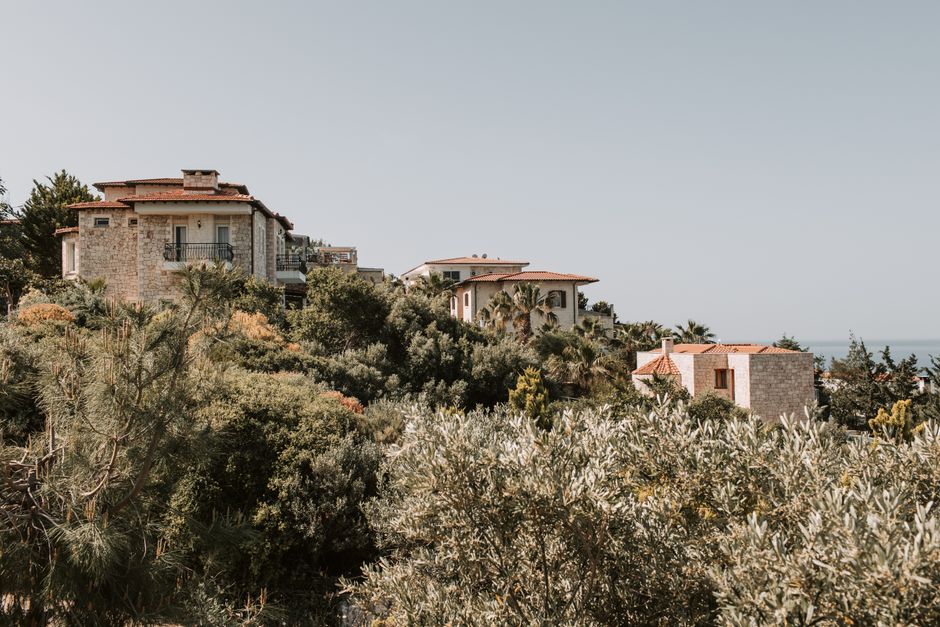
The other thing about this corner of Cyprus — properties here are often second homes, holiday villas, or part of small developments where someone visits monthly at best. A slow leak in Limassol gets noticed in a week. A slow leak above Polis gets noticed when the cleaner opens the shutters in March and the plaster has already let go.
So the leak you are searching for help with today is almost never new. It is simply newly visible.
What the stain is actually telling you
Water is a patient, lazy traveller. It enters at the highest available failure and runs along whatever surface it finds — a beam, a conduit, the underside of a slab — until gravity drops it somewhere convenient for itself and inconvenient for you. The wet patch on a Polis ceiling is the exit, almost never the entrance.
We see the same suspects on assessment after assessment:
- Flat roof upstands and parapet junctions where the original detail was thin and the sun has done the rest.
- Terrace and veranda thresholds where the tile finish sits proud of a tired waterproofing layer beneath.
- Window and door perimeters on exposed elevations, where movement cracks open a path the render can no longer bridge.
- Pool surrounds and planters built tight against the house, quietly feeding the wall behind them.
- Ground-floor walls and basements where rising damp and lateral damp have been mistaken for "a bit of condensation" for years.
None of these are dramatic. That is the problem. Cyprus owners are conditioned to wait for drama before acting, and these failures do not provide it until the repair has tripled in scope.
What ignoring it actually costs
Not in money — in building. A leak left to mature in a Polis villa rarely stays a cosmetic issue. Moisture inside a wall finds the reinforcement in the concrete and starts the slow chemistry that ends in spalling: rust expands, concrete cracks, and suddenly the structural conversation is real. Timber sub-floors on upper terraces rot from the underside where no one looks. Marble and travertine that the owner chose carefully lift and stain. Anti-mould paint gets thrown at the ceiling for three years running, and the actual failure carries on, two metres away, untouched.
And then there is the insurance angle, which deserves a sentence of its own. A documented defect, properly reported at the right moment, is a very different conversation with an insurer than a vague complaint about "damp." One of them gets taken seriously.
If the same patch has been repainted twice and come back, it is not a paint problem. It never was.
How we approach a leak in Polis
We start with the assumption that the visible symptom is lying to you about its location. Diagnosis comes first, always — exterior elevations, roof details, terraces, the relationship between the wet room above and the ceiling below, the planter no one thought about. We trace the water back to where it actually enters, not where it shows.
Then we choose the approach the situation demands. A parapet failure on an exposed roof is not the same problem as a basement wall pushing moisture inward, and neither is the same as a balcony that has been re-tiled over a dead membrane. We do not arrive with one favourite product looking for an excuse. We diagnose, we select the best-suited waterproofing approach for that specific area and exposure, and we document the defect properly — photographs, locations, cause, recommended remediation — in a report that holds up with insurers and future buyers.
The work itself is then carried out by vetted contractors under our supervision. The owner is not project-managing trades they have never met. We are. If you want the longer view on how we think about method selection, there is more in our piece on waterproofing methods, and on the failures that hide in plain sight in villa waterproofing across Cyprus.
Why "a quick fix" is the most expensive option here
Polis has no shortage of people willing to come out with a tube of sealant and a confident manner. They will close the visible crack. The water will find the next weakest point within a season — sometimes the same season — and the owner will be back where they started, minus a weekend and a little more of the substrate.
A leak repaired without a diagnosis is not repaired. It is postponed. And on this coast, with this sun and this winter, postponement compounds.
The villas and buildings we work on in Polis, Lachi, Neo Chorio and the broader Akamas edge tend to share a profile: meaningful properties, owned by people who chose them carefully, and who would rather have the problem solved once than entertained annually. That is the work we do. It is also, frankly, the only work worth doing on a building of any quality. There is a fuller picture of the recurring pattern in our reality check on damp and leaks in Cyprus villas, if you want to read further before getting in touch.
Book the assessment
If you have a stain, a smell, a soft patch of render, or just the uneasy feeling that the last rain told you something — have it looked at properly before the next one confirms it. Book a site visit and we will come to the property, diagnose what is actually happening, and tell you plainly what the right repair looks like. Prefer to send a photo first? Message us on WhatsApp and we will take it from there.