The first proper rain of the season has a way of telling the truth. A dark line above the cornice that was not there in September. A faint tide-mark behind the wardrobe. A drip on the marble that arrives, stops, and arrives again an hour later. Summer hid all of it. November does not.
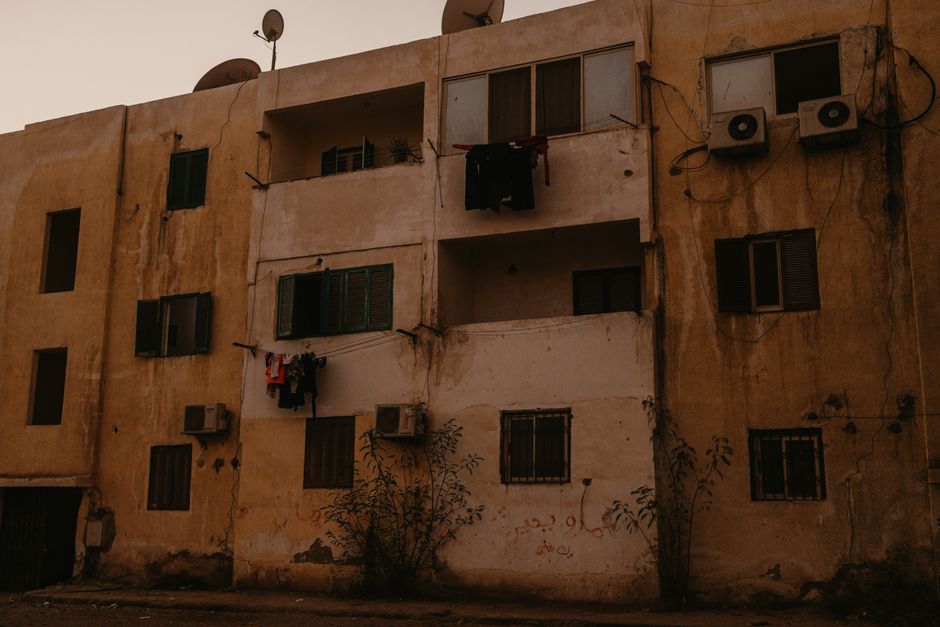
If you searched for water leak repair in Limassol, you almost certainly have one of those signs in front of you right now. Here is the short answer: the stain you can see is rarely above the source, sealant on top of it will not hold, and the fix that lasts begins with a proper diagnosis of where the water actually enters — not where it eventually shows.
Key takeaways
The short version, before we get into it:
- Most Limassol leaks are detailing failures — parapets, upstands, terrace thresholds, balcony drips, service penetrations — not the roof field itself.
- Water travels. The stain is downstream of the entry point, sometimes by several metres.
- Quick patches buy a season and hide structural damage accumulating underneath.
- We diagnose first, specify the right approach for the area, document every defect, and oversee vetted contractors.
- Every job is backed by our 10-year workmanship guarantee, across villas, complexes and apartment buildings.
What is actually happening behind that stain
Water is patient and lazy. It takes the easiest path through your structure, which is almost never a straight line down. It enters at a failed junction — a cracked parapet, a tired balcony upstand, a sealant bead that gave up two summers ago — and then runs along the top of the slab, follows a rebar, or wicks through a screed until it finds an edge to drip from. By the time you see a mark on the ceiling, the water has already been inside the structure for hours, sometimes days.
This is why the patch your handyman applied directly above the stain did nothing. He treated the exit. The entrance is somewhere else entirely.
The other quiet truth: by the time a stain is visible internally, the substrate above it is already saturated. Concrete that stays wet starts to carbonate around the reinforcement. Rebar begins to rust. Rust expands. Expansion cracks the concrete from the inside out. That is not a decorating problem. That is the beginning of a structural one.
Why Limassol punishes the careless detail
Limassol has a specific climate signature, and it is unforgiving to lazy construction. Long, brutally dry summers bake every membrane, every sealant bead, every flashing. UV degrades the elastomers. Heat cycles open hairline cracks in the concrete and the screed. Then, sometime in late October or November, the first real storm arrives — not a drizzle, an event — and the building is asked to behave like a sealed envelope after six months of being roasted.
Layer on top of that the coastal air. Salt-laden humidity finds metal fixings, drip edges and railings, corrodes them quietly, and turns sound details into weak ones. Many of the buildings we attend in Limassol were built fast, in bare concrete, with waterproofing treated as optional. That is the unspoken default across most of the island, and it is exactly what we exist to correct.
Then there is the human factor. The Cyprus habit of "we will deal with it next year" is expensive. Next year, the parapet has cracked further, the insulation under the terrace tiles is a sponge, and the bedroom below has a smell you cannot quite place.
The map of where Limassol leaks actually start
In no particular order, these are the areas that produce the overwhelming majority of the calls we get from Limassol owners and managers:
- Flat roofs and roof terraces — failed upstands at parapets, tired outlets, ponding where the fall was never right.
- Balconies and verandas — drip edges that never drip, thresholds level with the interior floor, planters built directly onto the slab.
- Facades and walls — hairline cracks that act as straws in driving rain, especially on south and west elevations.
- Ground level and basements — rising damp, poor tanking, garden beds pressed up against habitable walls.
- Swimming pools, planters and wet rooms — the slow leaks that show up two rooms away.
- Exposed concrete — the surface that everyone forgets is not, by itself, waterproof.
If your problem area is on that list, you are not unusual. You are typical. The question is what gets done about it.
Warning sign, likely cause, area we inspect
A quick reference for what you are probably looking at. It is not a substitute for a site visit — water is too clever for that — but it points you in the right direction.
| Warning sign | Likely cause | Area we inspect first |
|---|---|---|
| Brown ring on ceiling under a flat roof | Failed parapet upstand or blocked outlet | Roof perimeter, drains, upstand detail |
| Damp patch where balcony meets internal wall | Threshold detail and balcony waterproofing failure | Balcony slab, drip edge, door threshold |
| Bubbling paint on a ground-floor wall | Rising damp or external ground level too high | Plinth, external drainage, basement tanking |
| Persistent damp smell in a bedroom after rain | Slow leak from terrace or planter above | Terrace finishes, planter waterproofing, slab |
| White salt deposits on basement walls | Water moving through the structure from outside | Retaining walls, drainage, ground-level seal |
| Cracked render with rust streaks | Reinforcement corroding inside the concrete | Facade, structural concrete, exposed elements |
What it quietly turns into if you leave it
Ignored leaks do not stay still. They compound.
Finishes go first — paint, plaster, skirtings, the timber floor in the room next door. Then insulation, which, once wet, never recovers its thermal performance and starts to harbour mould. Then the substrate itself: screed delaminates, concrete spalls, reinforcement rusts. By the time the structural engineer is involved, the bill is an order of magnitude larger than the original repair, and the disruption to a family home or a leased apartment is severe.
There is also the insurance angle, which owners rarely think about until they need it. Insurers are increasingly reluctant to pay out on damage that was "gradual" — that is, damage you could reasonably have seen coming and chose not to act on. A documented diagnosis, with photographs and a written specification, changes that conversation. Without one, you are arguing from memory.
How WATERPROOFED.cy resolves it
We do four things, in this order, and we do not skip steps.
We diagnose the real source. That means a proper site inspection, not a glance from the street. We trace the water back from where it shows to where it enters, which often involves looking at areas the previous contractor never touched. We have written more than one report that began "the leak is not where you think it is."
We specify the right approach for the area. Roofs, balconies, basements, pools, planters and facades each have their own logic. We choose the approach best suited to the substrate, the exposure and the use of the space — and we write it down clearly enough that anyone competent could execute it. We do not commit to a single product for every situation, because that is how bad work gets done.
We document every defect. You receive a written report, with photographs, that identifies the source, the affected areas and the recommended works. It is structured to be useful to insurers, building committees and managing agents. If you are a manager of a complex in Limassol, this alone often pays for itself.
We oversee vetted contractors on site. The specification is only as good as its execution. We supervise the work, check the details at the moments that matter — primer coverage, upstand heights, lap discipline, cure times — and sign off only when it is right. This is where most jobs in Cyprus fall apart, and where we earn our keep.
Backing all of it: our 10-year workmanship guarantee. If a detail we signed off on fails within ten years, we return and resolve it. That is the point of doing this properly the first time.
Why this approach, and not a cheaper one
Because the cheaper one is not cheaper. It is the same money, spent twice, with a wet winter in between. We have walked into too many Limassol properties where the owner paid for a "fix" three years running and still has the stain. The maths only works when the first repair is the last one. For a closer look at how the wrong methods quietly fail, our guide to waterproofing methods explained is worth ten minutes of your time.
We also work at a level that suits the property. Villas, mansions, apartment buildings, complexes — the standard of the work matches the standard of the asset. That is the whole proposition.
Before you call anyone, do this
A quick site visit gets you a real answer. If you want a rough sense of the scope first, the instant estimate on our homepage will give you a sensible starting point in a couple of minutes. Then book the visit. The diagnosis is the part that matters.
The questions Limassol owners and managers ask us most
How quickly can you attend a leak in Limassol after the first rains?
We prioritise active leaks during the rainy season and aim to be on site within a few working days, sooner for serious cases. Book a site visit or message us on WhatsApp with photos and we will triage from there.
Do I need to wait for dry weather to fix a water leak?
No. Diagnosis is often better during or just after rain because the source reveals itself. The remedial works are then planned for the right weather window — we manage the sequencing so nothing is rushed onto a wet substrate.
Why does my ceiling stain reappear after the contractor patched it?
Because the patch was applied where the water exits, not where it enters. Water can travel several metres along a slab, a beam or a service penetration before it shows. Until the real entry point is identified and treated, it will keep returning. Our piece on why owners keep getting roof repairs wrong goes deeper on this.
Will you provide a report I can use with my insurer or building manager?
Yes. We document defects, photograph the source and the affected areas, and issue a clear written report. It is written to be useful for insurers, committees and managing agents — not as marketing fluff.
Do you work on apartment buildings and complexes, or only villas?
Both. We work on villas, mansions, apartment buildings and complexes across Limassol and the rest of Cyprus, including Paphos, Nicosia, Larnaca, Ayia Napa and Polis. Shared roofs, common terraces and basement car parks are routine work for us.
What does the 10-year workmanship guarantee actually cover?
It covers the workmanship of the waterproofing we specify and oversee, in the areas we treat. If the detail we signed off on fails within ten years, we come back and resolve it. That is the point of doing it properly the first time.
Settle it this season, not the next one
The leak you are looking at right now will not improve on its own. Every week it stays, the repair gets larger and the surrounding finishes get more involved. The right move is the unglamorous one: get the real source identified, get it documented, and get it resolved by people who will still answer the phone in ten years.
Book a site visit, or message us on WhatsApp with a few photos of what you are seeing. We will give you a straight read of the situation, a clear written specification, and work backed by our 10-year workmanship guarantee. One winter, one fix, done properly.