Most Limassol roofs were never waterproofed. They were sealed — at best — with whatever the builder had on the truck the week the slab cured, then left to argue with the sun for a decade. So when an owner says the roof has "started leaking," the honest answer is usually that it never stopped not-leaking. The first rain simply made it visible. Roof leak repair in Limassol, done seriously, begins with that admission.
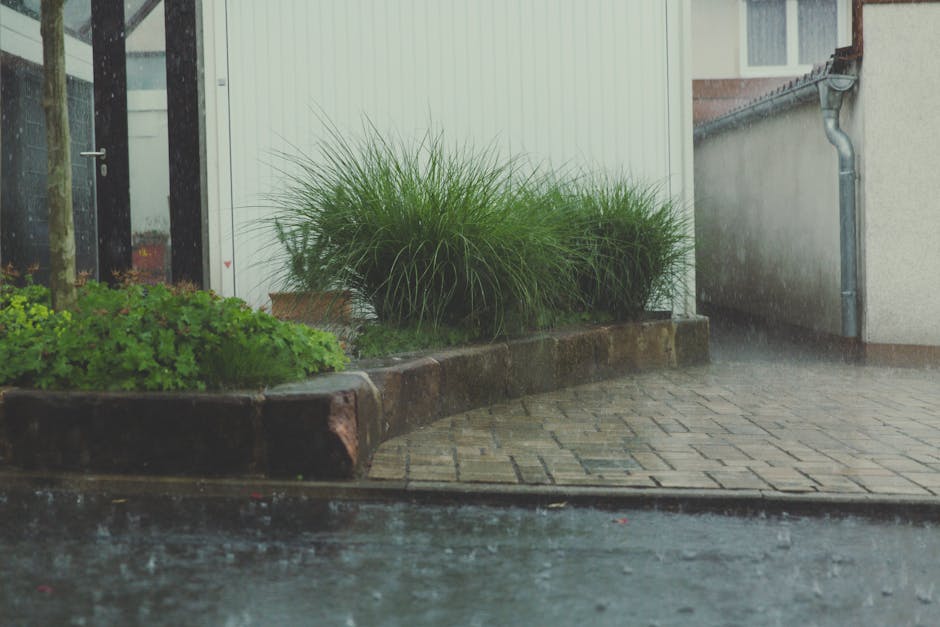
The assumption that a Cypriot roof is fine because it has been dry for years is the single most expensive misreading in this market. Dry is not waterproof. Dry is the absence of rain.
What the stain on your ceiling is actually saying
A brown halo in the corner of a bedroom is rarely the leak. It is the exit wound. Water travels — along rebar, down a conduit, across the underside of a slab — and surfaces wherever gravity and a tired finish let it. By the time it shows up indoors, it has already been inside the structure for longer than anyone wants to think about.
Which is why patching the ceiling is not a repair. It is a cover-up with a short shelf life.
Limassol owners often describe the same arc. A small mark after the first November downpour. A repaint in spring. A larger mark the following winter. Then a builder with a tub of something black goes up, smears the suspected area, and everyone agrees the matter is closed. It is not closed. It has been postponed, at compounding interest.
Why Limassol roofs fail the way they do
This coast punishes roofs in a very particular sequence. Months of hard UV bake whatever protective layer exists into something brittle. Salt-laden air, especially closer to the seafront and the marina, works on exposed metal — flashings, drains, parapet caps — quietly, every day. Then the rain arrives, and it does not arrive politely. It arrives in a single afternoon, in volumes the drainage was never asked to handle.
Flat roofs take the worst of it. Parapets crack at the corners. Drain outlets sit a few millimetres too high, so a shallow pond lives there for days after every storm. The slab telegraphs every fault — hairline cracks at the column heads, cold joints where pours met, penetrations around air-conditioning units that were drilled in years after the original build and never properly sealed.
Pitched roofs in the hills above the city have their own habits. Tiles slip. Ridge mortar fatigues. The underlayer, if there ever was one, has long since given up. Wind-driven rain from the south finds gaps that vertical rain never would.
None of this is unusual. All of it is predictable. Almost none of it is addressed until water is already inside.
The cost of waiting one more winter
The damage owners actually pay for is rarely the leak itself. It is everything the leak quietly funds on its way through the building.
Reinforcement bars inside the slab start to corrode the moment water reaches them. Corroded steel expands, and expanding steel cracks the concrete around it from the inside out. That is not a finish problem. That is a structural problem with a long, expensive tail.
Insulation, once wet, does not recover. It compacts, loses its rating, and breeds the kind of mould that settles into plasterboard and never quite leaves. Timber elements — pergolas, ceiling battens, anything organic on a terrace level — rot from the underside where no one looks. Marble and natural stone develop salt blooms that no cleaner removes, because the salt is migrating up through the slab, not sitting on the surface.
And then there is the calendar. A roof problem identified in October and properly resolved before the rains is a controlled job. The same problem opened up in February, with water already in three rooms, is an emergency — and emergencies on premium properties always cost more than the work itself, in displaced tenants, ruined finishes, and the awkward conversation with the insurer about whether the defect was documented.
Which brings us to the part most owners skip. Damp and leaks have a paper trail, and insurers read it carefully.
How we actually resolve it
We diagnose first. Always. A roof leak in a Limassol penthouse and a roof leak in a Mouttagiaka villa may present identically on the ceiling and have nothing in common at the source. Guessing is what got the building into this situation; we are not going to repeat the exercise in a more expensive uniform.
A site visit means walking the roof, the parapets, the drains, the penetrations, the junctions where the roof meets anything vertical. It means tracing the leak back from where it shows to where it begins — which is almost never the same place. It means looking at the substrate honestly: what is it, what condition is it in, what has already been applied to it, and what is realistically going to bond to it for the next fifteen years.
Then we select the approach that fits the situation. Different roofs, different exposures, different substrates, different answers. We do not arrive with a favourite product and look for a roof to use it on. That is the opposite of specialism. If you want the longer view on how we think about this, our waterproofing methods piece lays it out without the marketing.
Findings get documented properly — photographs, locations, defect descriptions written the way an insurer or a building manager actually needs them. The work itself is carried out by vetted contractors under our supervision, not handed off. We stay on site because the difference between a roof that holds and a roof that fails next winter is almost always in the detail at the edges, and edges are where unsupervised work gets quietly wrong.
We cover Limassol, Paphos, Nicosia, Larnaca, Ayia Napa and Polis — but the Limassol coastline, with its mix of high-rise residential, hillside villas, and older complexes near the seafront, is where we see the full catalogue of roof failures in a single week.
Before the next rain
The roofs that survive a Cyprus winter intact are not the lucky ones. They are the ones whose owners stopped assuming and called someone who diagnoses for a living. If you have a stain, a suspicion, or a roof that has simply never been looked at by a specialist, that is the conversation to have now — not in February, with buckets in the hallway.
For the wider picture on how leaks read across the city, our note on what the first rain reveals in Limassol is worth a few minutes.
Book the visit
Book a site visit with WATERPROOFED.cy, or message us on WhatsApp. We will look at the roof properly, tell you what is actually happening, and resolve it once.