The pattern is almost predictable now. A villa above Latchi, a stone-clad house near the harbour, a complex set back from the coast road — all of them fine last year. Then the first serious November rain arrives in a single afternoon, the humidity holds through December, and by February a dark bloom appears in the corner of a bedroom or above a shower door. That is what people search for when they type mold Polis into a phone. Not a cleaning tip. A quiet worry that something behind the wall is going wrong.
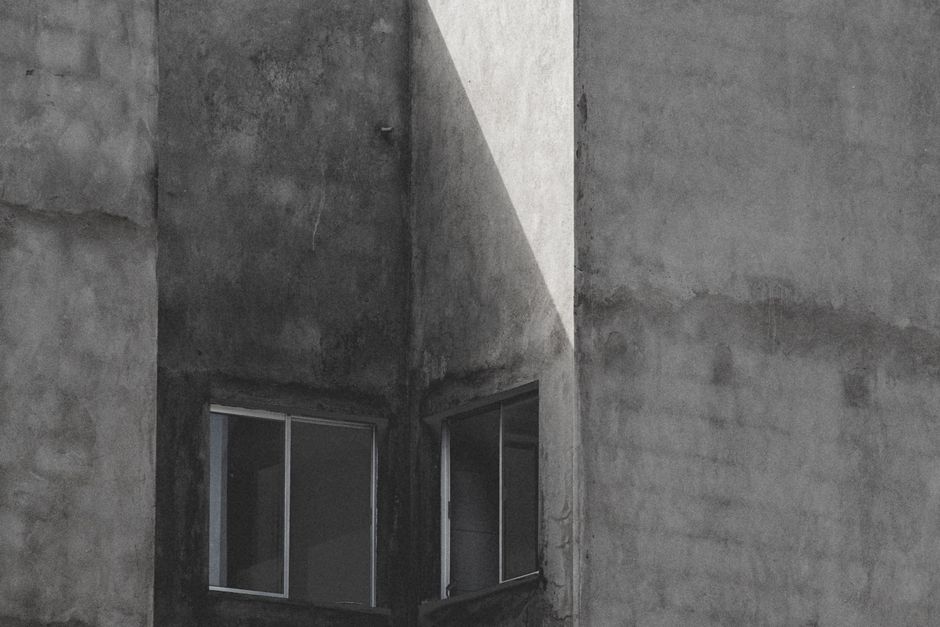
Here is the honest answer up front: mold on a Polis wall is almost never a wall problem. It is a water problem announcing itself in the only way it can. The spores are already in the air everywhere in Cyprus; what makes them settle and multiply on your surface is persistent moisture. Find the moisture, cut it off, and the mold has nothing to feed on. Paint over it, and you have bought yourself a season.
Key takeaways
The short version, before we go deeper:
- Mold is a symptom. In Polis, it usually points to water ingress through a roof, terrace, facade or ground-level detail — not a ventilation quirk.
- The coast and the Akamas amplify it. Salt air, humidity and fast-built concrete keep surfaces damp long enough for spores to establish.
- Cosmetic fixes — bleach, anti-mold paint, a dehumidifier — treat the stain, not the source. The water keeps arriving.
- We diagnose the real cause, produce a defect report you can hand to an insurer, and oversee vetted contractors through completion.
- Every job is backed by our 10-year workmanship guarantee, on villas, complexes and premium buildings across Cyprus.
What is actually happening behind the stain
Mold is the visible edge of a much longer story. Somewhere in the fabric of the building — often several metres from where the black spots appear — water is entering and lingering. It could be a hairline crack in a parapet, a failed junction between a terrace slab and a wall, a planter with no proper tanking, a shower tray whose seal gave up two years ago, or rising moisture pulling up through a ground-floor slab that was never waterproofed to begin with.
Water travels. It follows gravity, then capillary action, then the path of least resistance through porous plaster and concrete. It can enter on a roof and surface in a first-floor ceiling. It can wick up from a foundation and appear behind a wardrobe. By the time you see the mold, the moisture has been present, invisibly, for weeks or months. That lag is the reason so many owners are surprised — and why so many quick fixes fail. If any of this feels familiar, our piece on damp and leaks in Cyprus villas walks through how the pattern typically unfolds.
Why Polis, specifically
Polis has a particular set of ingredients that make mold more likely than the same property would be, say, inland from Nicosia.
First, the climate. The Akamas peninsula is beautiful precisely because it holds its own weather. Sea mist, sudden downpours after long dry spells, humidity that lingers in the shaded side of a stone villa well into the morning. Coastal properties see wind-driven rain hitting the facade horizontally — which finds every unresolved detail a builder ever left behind.
Second, the construction culture. Many premium properties around Polis and Latchi were built quickly during boom periods, in bare concrete with rendered finishes and generous terraces. Beautiful to live in. Unforgiving if the waterproofing was treated as an afterthought. We see the same detail failing again and again: terrace-to-wall junctions, planters built directly against the house, flat roofs with drainage that only just works, balconies where the slab is exposed to the sky.
Third, the habit. In Cyprus there is a very human tendency to say we'll deal with it next year. One winter of that is usually harmless. Three winters of it is a repair job that could have been a maintenance job. If you are seeing signs on the ceiling, the same logic applies — we explored it in ceiling water stains Polis.
Reading the signs before the mold arrives
Mold is late to the party. The building usually warns you first, and most owners do not know what they are looking at. Here is what to watch — and what it typically points to.
| Warning sign | Likely cause | Area we inspect |
|---|---|---|
| Dark bloom in a room corner, low down | Rising damp or slab-level ingress | Ground-level detailing, sub-structure, basement |
| Stain or blistering on a top-floor ceiling | Roof or parapet failure | Flat roof, drainage points, parapet junctions |
| Musty smell after rain, no visible mark | Concealed ingress inside cavity or ceiling void | Roof, facade, terrace above |
| Peeling paint on an external wall | Facade cracking, wind-driven rain saturation | Walls and facades, render, expansion joints |
| Mold around a shower or wet room | Failed internal waterproofing | Wet rooms, tanking, floor-wall junctions |
| Efflorescence (white salts) on masonry | Water passing through and evaporating | Wall build-up, ground contact, planters |
| Bubbling on a terrace or balcony floor | Membrane failure under the finish | Terraces, verandas, balconies |
None of these are guesses. They are the patterns we walk into every week across Polis, Paphos and the wider island. For rising damp specifically — a very common Polis story — we go deeper in rising damp Polis.
What it costs to leave alone
We never talk about repair prices before we have seen a property. But the cost of ignoring mold is not really financial in the first instance — it is structural, and it compounds.
Persistent moisture inside a reinforced concrete slab begins to corrode the steel. The steel expands as it corrodes. Expanding steel cracks concrete from the inside. Cracked concrete lets in more water. That is the loop, and it is patient. In a coastal Polis property, salt in the air accelerates every stage of it.
Above that, there is what the moisture ruins along the way: plaster you paid a craftsman to apply, oak floors, imported tiles, joinery, the smell of the house, the way it feels to walk in on a Friday evening. There is the insurance conversation that gets harder each year you leave it undocumented. And there is the resale conversation, in a market where buyers of premium property have learned to look for exactly these signs.
A villa above Chrysochous Bay does not need to fall down to lose value. It only needs to feel damp.
How we resolve it — properly, once
This is where our approach diverges from the standard cycle of paint, bleach, hope.
We start with diagnosis. A site visit, done properly, is the single most valuable step in the whole process. We read the building — its age, its orientation, its detailing, its history — and we identify where water is actually entering. Not where it is showing. Where it is entering. In our experience, the visible stain and the real source are in the same room maybe half the time. The rest of the time, the source is elsewhere entirely.
We then write a clear specification of what needs to be done, and document every defect in a report you can hand to your insurer, your management company, or a future buyer. This part matters more than most owners realise. A written, photographed, coordinated record of the problem is what turns a vague complaint into an actionable claim.
We select the best-suited waterproofing approach for the situation. We do not have a single favourite product we push onto every job — the roof of a Latchi villa and the sub-structure of a Polis complex are different problems and deserve different answers. What matters is that the right area is treated in the right way, once.
Then we oversee vetted contractors on site. This is the step almost no one does, and the reason so many jobs in Cyprus fail on the second winter. Materials only perform if they are installed correctly. Our contractors are chosen because they install correctly, and we are there to make sure they do. If you have already had a leak diagnosed but not resolved, water leak repair Polis explains how we approach the coastal detailing that catches most crews out.
And every job is backed by a 10-year workmanship guarantee. Not a leaflet promise. A written commitment.
Book the site visit before the next rain
If you have seen the first signs, the useful next step is a proper look at the property. You can get an instant estimate on our homepage, or book a site visit and we will come and read the building in person.
Frequently asked questions
Why does mold keep coming back in my Polis villa even after repainting?
Because paint covers the stain, not the cause. Somewhere behind that wall, water is still arriving — through a roof detail, a terrace junction, a facade crack or from the ground. Until the water route is diagnosed and shut off, the mold will return within a season or two.
Is mold in a Polis property a serious problem or mostly cosmetic?
It looks cosmetic and behaves structurally. Persistent moisture corrodes reinforcement inside concrete, degrades plaster, warps timber, and quietly reduces the value of the property. By the time it is obvious, the repair scope has usually doubled.
Does the sea air in the Akamas region make mold worse?
Yes. Salt-laden coastal air keeps surfaces damp for longer, sits in unventilated corners, and accelerates the breakdown of any waterproofing detail that was borderline to begin with. Coastal properties around Polis need to be waterproofed accordingly.
Will my insurer cover water damage and mold in Cyprus?
Often yes, if the cause is documented properly. That is why we produce a written report of the defects, their location and the recommended scope — the kind of document insurers actually accept, rather than a vague verbal quote.
How does WATERPROOFED.cy actually resolve the problem?
We inspect the property, diagnose the true water source, select the best-suited waterproofing approach for the affected area, and oversee vetted contractors on site until it is completed correctly. The workmanship is backed by our 10-year guarantee.
Do you only work on villas, or also on complexes and apartment buildings?
We work on villas, mansions, apartment buildings and complexes across Polis and the rest of Cyprus. Premium properties are our focus — anywhere the standard has to be higher than a quick patch.
Let us look at it before another winter
Most properties in Cyprus were never properly waterproofed. Yours can be — properly, once. If mold has appeared anywhere in your Polis home or building, book a site visit and we will diagnose what is behind it, document what needs doing, and oversee the work through to completion. Prefer a quicker conversation? Message us on WhatsApp. Either way, every job we take on is backed by our 10-year workmanship guarantee — because the point is not to visit twice.