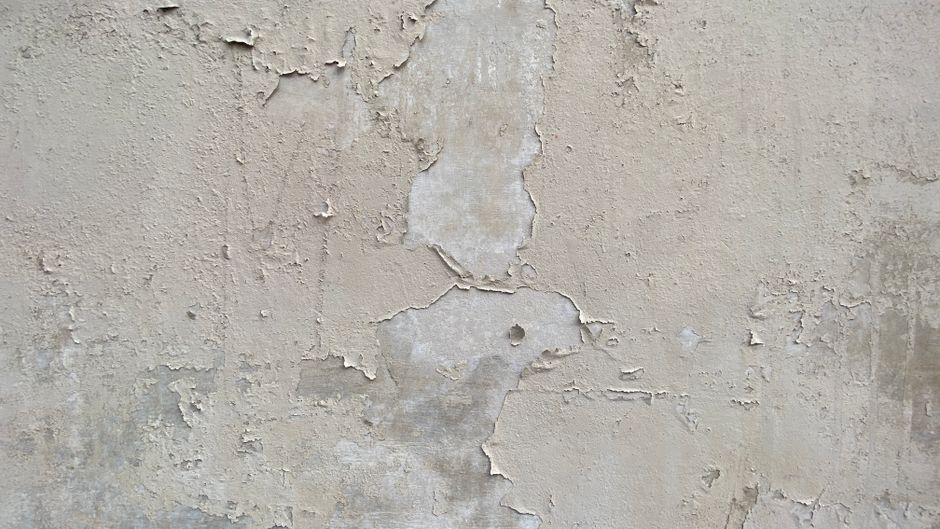
You are looking at a white, powdery bloom creeping across an outside wall — or worse, appearing on the inside of a bedroom — and you want to know two things: is it serious, and will paint make it go away. Short answer: yes, and no. Efflorescence salt on walls in Cyprus is not a cosmetic defect. It is water moving through your building, dissolving mineral salts as it travels, and depositing them on the surface as it evaporates. The salt is the receipt. The water is the problem.
Key takeaways
The short version, before we get into the detail:
- Efflorescence is a symptom of water moving through the wall, not a surface stain.
- In Cyprus it is driven by bare concrete, coastal salt air, and the first heavy November rain.
- Painting over it hides the cause and accelerates render failure, corrosion and interior damp.
- The fix is diagnosis first — find the water path, then apply the right waterproofing approach for that area.
- WATERPROOFED.cy diagnoses, documents for insurers, oversees vetted contractors, and backs the job with a 10-year workmanship guarantee.
What efflorescence actually is
Concrete, mortar, render and blockwork all contain soluble mineral salts — mostly calcium, sodium and potassium compounds locked into the mix. On their own, they sit there quietly for decades. Introduce water, and they dissolve. The water then travels through the capillaries of the material, reaches the surface, evaporates, and leaves the salts behind as a crystalline deposit. That white haze, sometimes fluffy, sometimes hard and glassy, is what we call efflorescence.
So the salt is not the enemy. The enemy is the water route the salt has just mapped for you, in high contrast, on the outside of your wall.
There is a harder cousin worth mentioning: cryptoflorescence, where the salts crystallise just beneath the surface instead of on it. That one is quieter and more damaging — it expands inside the render and pushes the finish off from behind. If your paint is bubbling, flaking in coin-sized discs, or sounding hollow when you tap it, that is often what is happening.
Why Cyprus walls do this so willingly
If you have owned property here through more than one winter, you already know the pattern. Long dry summer, then the first serious rain in October or November arriving all at once — sometimes fifty or sixty millimetres in an afternoon. Walls that have been baking for six months suddenly take on water at every unsealed junction, crack and porous surface.
Add the specifics of how buildings go up on this island:
- Large areas of exposed or minimally rendered concrete and blockwork.
- Parapets, copings and roof-to-wall junctions detailed for speed, not for a forty-year life.
- Terraces, verandas and balconies where the waterproofing layer was an afterthought under the tiles.
- Ground-floor walls in direct contact with unsealed slabs, wicking moisture upward.
- Coastal properties breathing in chloride-rich air day and night.
Each of those is a route for water to enter, dissolve salts inside the structure, and carry them back out to your paintwork. The Cyprus climate then evaporates the water fast, which is why the bloom appears so cleanly and so quickly. It is almost diagnostic in its neatness — the wall is telling you exactly where the water is going. Most owners just paint over the message.
For a broader picture of how these water paths behave in Cypriot construction, Damp and Leaks in Cyprus Villas: What's Really Going On is worth ten minutes of your time.
What it quietly turns into if you ignore it
The temptation, understandably, is to wire-brush it, repaint, and deal with it next year. Next year rarely goes well. Here is the sequence we see, in order, on properties that have been left another season or three:
First, the paint film starts to fail in patches — flaking, chalking, or lifting in those tell-tale hollow discs. The render behind it begins to debond in areas you cannot see yet, but which sound different when tapped. Interior walls on the other side start showing faint tide marks near skirtings, and a musty smell settles in rooms that back onto the affected wall. Then, if there is any reinforcement in the concrete anywhere near the water path, it begins to corrode. Steel expands as it rusts. Concrete cracks and spalls. At that point you are no longer dealing with a waterproofing issue — you are dealing with a structural repair, and the number attached to it changes shape entirely.
Meanwhile, the salt itself is not passive. Each wetting-and-drying cycle pushes more crystals into the pores of the render, mechanically wedging it apart from within. This is the part that makes owners think their builder used bad material. Usually the builder used ordinary material. What was missing was a proper waterproofing strategy for that area.
Warning signs and where we actually look
A useful table before we go further. If you recognise the sign on the left, this is the water path we start investigating on the right.
| Warning sign on the wall | Likely water source | Area we inspect first |
|---|---|---|
| White bloom high on external walls after rain | Parapet, coping or roof-edge failure | Roof perimeter, parapet capping, flashings |
| Salt band at skirting level, inside or out | Rising damp from slab or ground contact | Ground-floor junction, DPC line, external ground level |
| Bloom around window and door reveals | Failed frame seals or lintel detailing | Reveals, sills, lintel-to-render interface |
| Efflorescence on a terrace or balcony soffit | Failed waterproofing under tiles above | Terrace or balcony deck, drains, upstands |
| Salt streaks below a planter or pool edge | Leaking planter or pool shell | Planter lining, pool tank, surrounding structure |
| White haze on basement or garage walls | Sub-structure water ingress | Basement walls, tanking, external drainage |
| Recurring bloom on a coastal-facing facade | Wind-driven rain plus airborne salt | Facade coating, joints, exposed concrete |
That table is not exhaustive — it is a starting point. Real diagnosis needs the wall in front of you, the building around it, and the story of when the marks appear.
How WATERPROOFED.cy resolves it
Our approach is boringly consistent, and we are proud of that. Excitement in this trade is usually the sound of something going wrong.
We diagnose the real source. Before we specify anything, we walk the building and identify the water path that is feeding the efflorescence. That means the affected wall, yes, but also whatever is above it, beside it, behind it and beneath it. Roofs and flat roofs, walls and facades, terraces and balconies, ground-level and basement areas, pools, planters, wet rooms, exposed concrete — we treat the building as one water system, because that is what it is.
We write a clear specification. Once we know what is happening, we select the best-suited waterproofing approach for that specific area and situation. We do not have a favourite product we sell to everyone. Different areas of the same villa often need different approaches, and matching the approach to the substrate, the exposure and the detail is the entire job. If you want a broader read on that logic, Waterproofing Methods Explained: A Cyprus Owner's Guide sets it out plainly.
We document every defect in a written report. Photographs, moisture readings, mapped locations, the underlying cause, and the recommended remediation. This is the document you want if there is any question of a builder's liability, an insurance claim, or a dispute between co-owners of a complex. Most owners have never been given anything like it.
We oversee vetted contractors on site. The specification is worthless if the person applying it cuts a corner at the parapet junction. Our team is on site checking preparation, thickness, laps, upstands and finishing. This is where jobs are actually won or lost, and it is the reason we can stand behind the work afterwards.
Every job is backed by our 10-year workmanship guarantee. Not a leaflet. A guarantee, because we have controlled the diagnosis, the specification and the execution.
This is what "fixed once" actually means in practice. More on the mindset in Waterproofing Specialist Cyprus: What Owners Actually Need.
Book a site visit — or get a rough idea now
If the wall is already telling you something, do not wait for the next rain to underline the point. Get an instant estimate for the property, or book a site visit and we will come and read the building properly.
Why owners choose us for this specifically
Efflorescence sits in an awkward gap. It is too subtle for a general builder to take seriously, and too structural for a painter to solve. We exist precisely for that gap. We work on villas, mansions, apartment buildings and complexes across Limassol, Paphos, Nicosia, Larnaca, Ayia Napa and Polis, and this is the kind of problem we have diagnosed and closed out hundreds of times.
Owners who call us tend to have already tried one round of cosmetic repairs. Managing agents call us when the co-owners of a complex are starting to argue about whose balcony is leaking onto whose ceiling. In both cases, what they need is not another quote — it is a proper diagnosis, a document that stands up in a room with an insurer or a lawyer, and a team that will do the remediation correctly. That is what we do. Villa Waterproofing Cyprus: What Owners Don't See covers the rest of the picture.
Frequently asked questions
Is efflorescence on my walls dangerous?
The salt itself will not harm you. What it points to will. Persistent efflorescence means water is repeatedly migrating through the wall, and over time that leads to render debonding, corroded reinforcement inside the concrete, and interior mould. It is a warning light, not a stain.
Can I just wash the salt off and repaint?
You can, and it will return — often within one wet season. Paint traps the moisture behind the film, which then pushes the coating off in sheets. Cleaning is fine as a cosmetic step, but only after the water path has been diagnosed and sealed at source.
Why is efflorescence so common on Cyprus villas and buildings?
Cyprus builds fast, often in bare or minimally rendered concrete and blockwork, in a climate that alternates long dry heat with short violent rain. Coastal air adds airborne chlorides. The combination pulls soluble salts to the surface every time the wall wets and dries — which here, is constantly.
How do you diagnose where the water is actually coming from?
We inspect the affected area in context — the roof or terrace above, the parapet detailing, the render, the ground junction, the plumbing runs behind it. We use moisture readings, visual mapping and, where needed, targeted opening-up. You get a written report documenting the defect, useful for insurers and for any dispute with a builder.
Do you cover the whole island?
Yes. We work across Limassol, Paphos, Nicosia, Larnaca, Ayia Napa and Polis, on villas, mansions, apartment buildings and complexes. Every job — regardless of scale — is backed by our 10-year workmanship guarantee.
What happens if I leave it another season?
The salt will keep advancing, the render will start to hollow behind the finish, and internal walls will begin to show tide marks and mould. Reinforcement corrosion inside the concrete is the expensive one — once it starts spalling, you are no longer waterproofing, you are repairing structure.
Have the wall read properly
Efflorescence is one of the most honest signals a building will ever give you. Ignore it, and it stops being a wall problem and becomes a structural one. Treat it as a diagnostic clue, and it is one of the easier things we resolve — cleanly, once, and backed by our 10-year workmanship guarantee.
Book a site visit and we will walk the property with you, identify the water paths behind the salt, and give you a written report and a clear specification for what needs to happen. If it is quicker, message us on WhatsApp with a couple of photographs and the town — Limassol, Paphos, Nicosia, Larnaca, Ayia Napa or Polis — and we will take it from there. The work of stopping this properly is not dramatic. It is just done correctly, by the right people, in the right order. That is the whole trick.