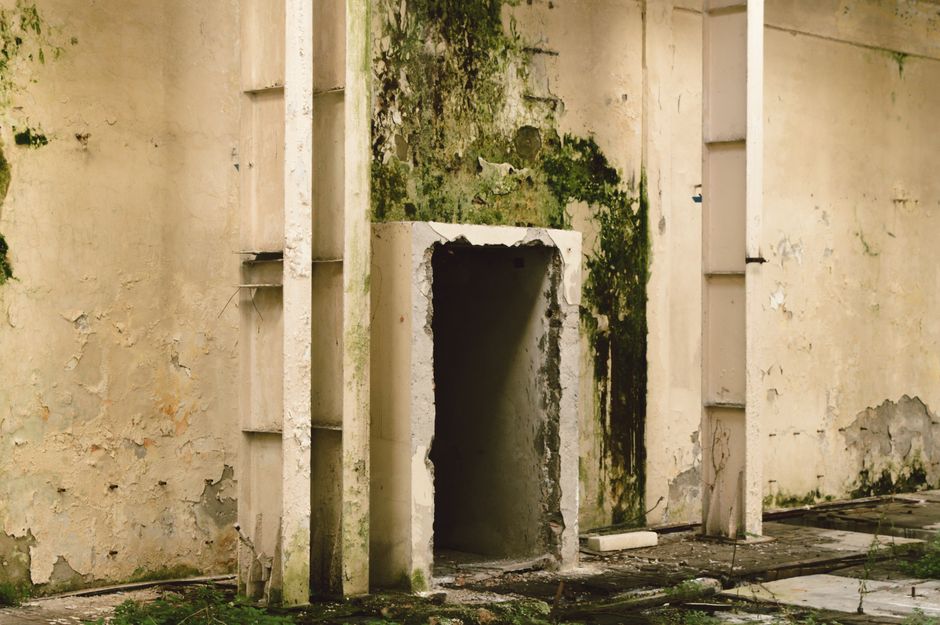
It is almost always the same story. A villa above Kato Paphos, or an apartment building near the coast road, that was fine last winter. A faint shadow at the base of a wall in the spring. By October the skirting is lifting, the paint is blooming in a horizontal band, and a salty white powder has appeared where there was none. That is rising damp in Paphos, and by the time you can see it on the finish, it has already been working on the structure for months.
Key takeaways
The short version, before we go deeper:
- Rising damp in Paphos is a ground-level and sub-structure problem that shows on the wall — not a wall problem with a wall solution.
- Coastal humidity, salt and bare-concrete construction make Paphos properties unusually exposed compared to inland Cyprus.
- Replastering or repainting without diagnosis hides the source; the damage continues underneath and returns within a season or two.
- We diagnose the real cause, write a clear specification, and document defects in a report you can use with insurers.
- Every job we oversee is backed by a 10-year workmanship guarantee, across Paphos and island-wide.
What rising damp actually is — and what it is not
Rising damp is groundwater moving upward through masonry by capillary action, carrying dissolved salts with it. It stops when it runs out of energy, usually somewhere between half a metre and a metre above floor level. That is the famous tide mark. The salts stay behind in the wall even after the water evaporates, which is why the problem feels like it never quite leaves — because chemically, it has not.
What it is not: it is not condensation, which sits higher and on cold surfaces. It is not a leaking pipe, although the two are often confused. It is not bad paint. It is a sign that the property is taking water from the ground and the sub-structure, and the wall is simply the surface where you finally notice.
This distinction matters because each of those causes has a different fix. A specialist who cannot tell them apart will sell you the wrong one.
Why Paphos punishes this problem in particular
Paphos is not a forgiving environment for masonry. Three things compound here in a way they do not inland.
First, the air itself. Coastal Paphos carries salt year-round. Salt is hygroscopic — it actively pulls moisture out of the air and into the wall, and it keeps doing so long after any single rain event has passed. A wall that would dry out in Nicosia stays damp here.
Second, the ground. Large parts of the city sit on terrain that drains slowly in winter and bakes hard in summer. Water sits against foundations for weeks at a time during the wet season. If the sub-structure was not properly tanked when the building went up — and on a great many Paphos properties it was not — that water has an open invitation.
Third, how things were built. A serious proportion of Paphos villas and apartment buildings went up quickly, in bare concrete, during boom years where waterproofing at ground level was treated as optional. The first November rain, arriving all at once after a dry summer, finds every shortcut that was taken a decade ago. The owner finds it next spring, on the inside.
For more on the pattern across the island, see Damp and Leaks in Cyprus Villas: What's Really Going On.
What it quietly turns into if you leave it
This is the part owners underestimate, and it is the part we wish more people understood before they called us.
Rising damp does not stay cosmetic. The salts it deposits are slowly corrosive to plaster, to the steel inside reinforced concrete, and to anything timber it reaches — skirting, joinery, fitted furniture, the underside of staircases. In a Paphos villa with stone or marble finishes, the salts come through and bloom on the surface. In an apartment building, they reach the rebar in ground-floor columns, and what was a damp wall becomes a structural conversation.
Then there is the secondary problem: mould. A persistently damp wall feeds it. Once it takes hold behind furniture, in wardrobes, in the corners of ground-floor bedrooms, it becomes a health issue as well as a building one. We have written about that cycle specifically in Mold Paphos: Why It Keeps Coming Back And How To Stop It.
And the financial cost — not in figures, but in scope — grows non-linearly. A diagnosis and a properly specified intervention at year one is a contained project. The same property at year four is a full strip-out of finishes, replacement of skirting and joinery, treatment of affected concrete, and reinstatement of everything you used to have. The damp itself was the cheap part. The damage it caused while you were thinking about it is what hurts.
Reading the signs before they read you
Most owners notice rising damp in one of three moments: when a tenant complains, when something is moved away from a wall during a refurbishment, or when a sale is on the table and a surveyor flags it. By all three points, it is well established.
Here is what the early signs actually look like, and what they usually mean.
| Warning sign | Likely cause | Where we inspect |
|---|---|---|
| Horizontal tide mark up to ~1m on a ground-floor wall | Capillary rise through masonry from the sub-structure | Ground-level walls, floor-to-wall junctions, sub-structure |
| White, powdery bloom on plaster or stone | Salts carried up by groundwater, left behind as water evaporates | Affected walls and adjacent floor build-up |
| Lifting skirting, soft plaster behind it | Sustained moisture at the base of the wall | Wall base, slab edge, external ground level outside that wall |
| Blistered or flaking paint in a band, not a patch | Moisture pressure pushing finishes off the substrate | Internal wall plus the external face of the same wall |
| Cold, persistently damp feel in a ground-floor room | Combined rising damp and poor sub-structure tanking | Basement or sub-structure, external drainage, planters against the wall |
| Damp showing only after heavy rain | Likely a drainage or ground-water management issue, not pure rising damp | External ground level, downpipes, planters, terrace junctions |
If you recognise more than one row of that table in your own property, the diagnosis is overdue, not optional.
For adjacent symptoms that often show up alongside rising damp — water stains on ceilings, slow leaks tracking down internal walls — Ceiling Water Stains Paphos and Water Leak Repair Paphos are worth reading in parallel.
Not sure which of those signs you are looking at? Book a site visit and we will tell you exactly what it is — or get an instant estimate to start the conversation.
How WATERPROOFED.cy resolves rising damp, properly, once
We do not sell a product. We sell a diagnosis, a specification, and oversight of the people who carry the work out. That is the entire point of the firm.
On a Paphos property with suspected rising damp, the work runs like this.
We diagnose the real source. That means surveying the ground-level walls, the floor-to-wall junctions, the sub-structure and basement where present, the external ground level against the affected walls, and any planters, terraces or paving that sit hard against the building. We separate rising damp from condensation, from lateral penetration, from a slow plumbing leak, and from a drainage failure outside. Most properties have more than one of these in play. That is normal. Treating one and ignoring the others is what turns into a repeat job.
We select the best-suited approach for the situation. Different walls, different substrates, different sub-structures and different exposures need different solutions. We will not pretend otherwise, and we will not name a single product in a journal article and tell you that is what your building needs. It might not be. The choice belongs in the specification we write for your specific property.
We write a clear specification and document everything. Every defect we find is photographed, recorded and written into a report that is useful for you, for your building manager, for a future buyer, and for insurers if it ever comes to that. Owners of premium properties tend to appreciate this part more than any other. They are used to vague verbal quotes. We do not work that way.
We oversee vetted contractors on site. The work is carried out by trades we have used before, against the specification we wrote, with us checking it. This is the difference between a job that holds for a decade and a job that holds until the first wet winter.
We back it for ten years. Every job we oversee is covered by our 10-year workmanship guarantee. We can offer that because we control the diagnosis, the specification and the supervision. If any of those three were taken away from us, the guarantee would not exist — which is exactly why we do not take shortcuts on any of them.
We do this work on villas, mansions, apartment buildings and complexes across Paphos, Polis, Limassol, Nicosia, Larnaca and Ayia Napa. The model does not change with the size of the property. The level of care does not change either.
Why not just replaster and move on
Because it does not work, and the people selling it to you know it does not work.
Replastering a wall affected by rising damp without addressing the source is the most common mistake we are called in to undo on Paphos properties. The new plaster looks excellent for a winter, perhaps two. Then the salts find their way through, the tide mark reappears slightly higher than before, and the owner has paid twice — once for the cosmetic repair, once for the proper one. In between, the substrate behind the plaster has been quietly degrading the whole time.
If someone offers to fix rising damp in your villa by replastering the affected wall and repainting it, ask them what they think is causing the damp. If the answer is the wall, find someone else.
Frequently asked questions
How do I know it is rising damp and not just condensation?
Rising damp typically shows as a horizontal tide mark up to about a metre from the floor, often with salt blooms, blistered paint or crumbling skirting. Condensation tends to appear higher up, on cold surfaces, and worsens with closed windows. The two can coexist, which is exactly why diagnosis matters before any repair is specified.
Why does rising damp seem worse in Paphos than inland?
Paphos combines coastal humidity, salt-laden air and a large stock of fast-built, bare-concrete properties on ground that holds moisture in winter. Salt draws water into masonry and keeps it there. Inland properties dry out faster; coastal ones in Paphos rarely get the chance.
Can I just replaster the wall and repaint?
You can, and it will look fixed for a season. The moisture and salts behind the plaster do not leave because the surface was changed — they migrate, push through the new finish, and return. Cosmetic repairs without diagnosis are the most expensive way to deal with rising damp, because you pay twice.
Do you cover Paphos villas, apartment buildings and complexes?
Yes. We work on villas, mansions, apartment buildings and complexes across Paphos, Polis, Limassol, Nicosia, Larnaca and Ayia Napa. The diagnosis and oversight model is the same whether it is a single villa or a multi-block complex.
Will I get a report I can use with my insurer?
Yes. We document the defects we find, photograph the affected areas, and produce a written report that is useful for insurers, building managers and owners. That documentation is part of the work, not an add-on.
What does the 10-year guarantee actually cover?
Our workmanship guarantee covers the waterproofing work we specify and oversee for ten years. Because we diagnose the real source and supervise vetted contractors against a written specification, we are willing to stand behind the result for a decade.
Have us look at it before another winter
Rising damp does not pause and wait for a convenient month. Every wet season it deposits more salt, lifts more finish, and gets closer to the things you do not want it touching. The right time to deal with it is before the next November rain, not after.
If you own or manage a villa, an apartment building or a complex in Paphos and any of this sounds familiar, book a site visit and we will diagnose what is actually happening, document it properly, and tell you exactly how we would resolve it — backed by our 10-year workmanship guarantee. Prefer to start with a quick conversation? Message us on WhatsApp, or get an instant estimate from the homepage. We will take it from there.