Most owners in Nicosia assume rising damp is a paint or plaster problem. It isn't. It's a structural moisture problem that paint and plaster are simply the first things to fail in front of — and treating the finish while ignoring the source is why the same wall keeps coming back, year after year, in the same houses, in the same neighbourhoods. If you're searching rising damp Nicosia, you're already past the cosmetic stage. Let's talk about what's actually happening.
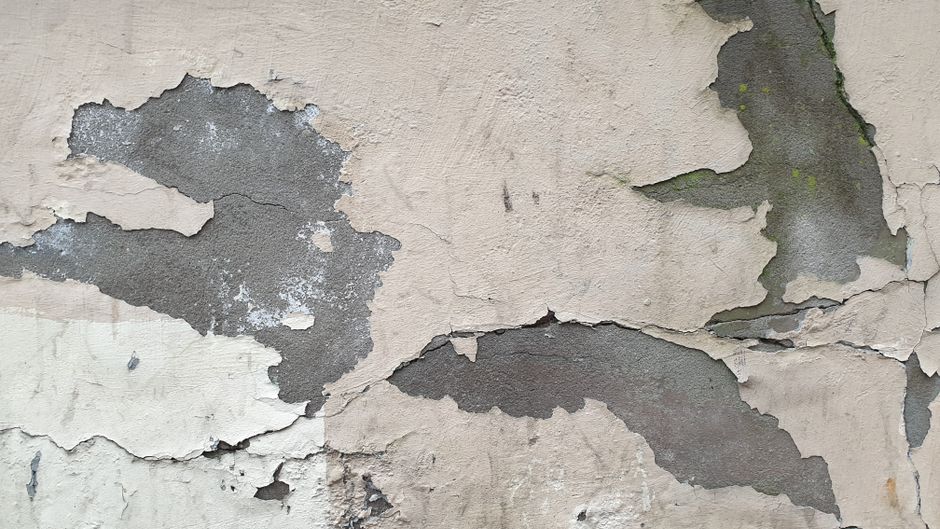
Key takeaways
The short version, before we go into the detail:
- Rising damp in Nicosia is moisture climbing through the base of the wall by capillary action — not a leak, not condensation, not bad paint.
- The capital's long dry season and sudden, concentrated winter rainfall make the problem hide for months and surface violently.
- Left alone, it destroys plaster, skirtings, electrics, and eventually the steel inside the concrete.
- We diagnose the real source, write a clear specification, document every defect in an insurer-ready report, and oversee vetted contractors so it's done once.
- Every job is backed by our 10-year workmanship guarantee, across Nicosia and island-wide.
What rising damp actually is — and what it isn't
Rising damp is groundwater drawn upward through porous building materials by capillary pressure. It carries dissolved salts with it. When the water evaporates near the surface of the wall, the salts stay behind, crystallise, and push the paint, the plaster and eventually the render off the substrate. That bloom of white powder you sometimes see along a skirting? That's the wall telling you exactly what it's doing.
It is not condensation, which forms top-down on cold surfaces. It is not a roof leak, which we cover separately in our piece on roof leak repair in Nicosia. It is not a burst pipe, which tends to be localised and dramatic. And it is rarely "just old paint" — though that is what most owners are told first.
The giveaway is the height. Rising damp climbs to a consistent line — generally somewhere between half a metre and a metre and a bit — and stops. That horizontal tide mark, sometimes with a faint yellow stain along its upper edge, is the calling card.
Why Nicosia gets this so badly
Nicosia is the hottest, driest major city on the island. For most of the year, the ground around your building is bone dry and the lower part of the wall feels stable. What's actually happening underneath that calm surface is that mineral salts from the soil are concentrating in the masonry at the base, drawn up slowly during the cooler months and left behind every summer as the moisture evaporates.
Then the first real November rain arrives — and in Nicosia, it tends to arrive all at once. The ground saturates within hours. The wall, already loaded with salts and often finished in cement-rich render that doesn't breathe, has nowhere to push the moisture except upward and outward, through your interior finishes.
There's a second factor specific to the capital: the pace of construction over the last few decades. A lot of buildings here went up quickly, with damp-proofing details treated as an afterthought or omitted entirely. Ground-level junctions between the slab and the wall — exactly where rising damp lives — are frequently the weakest point of the whole envelope. We see it in apartment buildings near the centre and in newer villas on the outskirts in roughly equal measure.
Add to that the habit, familiar to anyone who's owned property here long enough, of dealing with damp "next year" — and you have the conditions for a problem that compounds quietly until it can no longer be ignored.
What it quietly turns into if you leave it
This is the part owners underestimate. Rising damp doesn't stay polite.
First, the finishes go. Paint blisters, plaster crumbles, skirting boards swell and warp. That stage is annoying but cosmetic. Then the moisture reaches the things behind the wall: electrical sockets at floor level, the timber in built-in joinery, the backs of fitted kitchens and wardrobes. Now you're replacing things that weren't supposed to be touched for twenty years.
Keep ignoring it and the problem moves into the structure itself. Persistent moisture in reinforced concrete, especially with salt-loaded water, attacks the rebar inside. Steel corrodes, expands, and starts to crack the concrete from within. By the time you see rust staining on the exterior, you are no longer dealing with a damp problem — you're dealing with a structural one, and the repair conversation changes entirely.
In apartment buildings and complexes, there's a further dimension: shared walls, shared liability, and management committees that don't enjoy receiving reports written in a hurry. The earlier the defect is documented properly, the cleaner every conversation that follows — with co-owners, with insurers, with future buyers. We go into this in more depth in our overview of damp and leaks in Cyprus villas, and the same logic applies to buildings.
Reading the symptoms before the diagnosis
Before the instruments come out, the wall itself usually has something to say. The table below is what we look for on a first walk-through — not a substitute for diagnosis, but a way to think clearly about what you're seeing.
| Warning sign | Likely cause | Area we inspect |
|---|---|---|
| Horizontal tide line at ~1m, salt bloom | Classic rising damp through base of wall | Ground-level wall-to-slab junction, external ground levels |
| Damp patch concentrated under a window | Failed sill detailing or facade ingress, not rising damp | Facade, sill, surrounding render |
| Damp on an internal wall with no exterior face | Plumbing leak or slab moisture | Service runs, slab, wet-room substrate above |
| Black mould high on walls and ceiling corners | Condensation, not rising damp | Ventilation, thermal bridging, roof detailing |
| Rust staining on exterior at low level | Advanced rising damp reaching reinforcement | Concrete cover, structural elements, ground conditions |
| Skirtings warping, parquet lifting near walls | Sustained moisture at floor-wall junction | Floor build-up, perimeter, sub-structure |
If two or three of these are familiar, the wall isn't asking politely anymore.
How WATERPROOFED.cy resolves it
We work on buildings, complexes, villas and premium properties. Not small repairs. Not band-aids. The reason owners and building managers across Nicosia call us is that we treat rising damp as what it is — a diagnostic problem first, a construction problem second.
The process is straightforward.
We come to site and diagnose the actual source. That means moisture readings at different heights, salt analysis where it matters, inspection of ground levels and drainage around the affected wall, and a hard look at the wall-to-slab junction and any render or finish trapping moisture. We're trying to answer one question: where is the water coming from, and why is it stopping where it's stopping. Guessing is not part of the service.
We then write a specification matched to your building. Rising damp at the base of a ground-floor wall in an older Nicosia townhouse is not the same problem as moisture migrating through a basement wall in a newer complex, and the right approach is whatever the diagnosis points to. We won't tell you which method we'll use before we've seen the building — that's the whole point of doing this properly.
We document everything in a written report. Defects, locations, causes, recommended works. Owners use it with insurers. Managers use it with co-owners. You use it for your own records. It exists because every job we do is worth documenting, and because guesswork doesn't survive a written page.
We oversee vetted contractors on site. We don't subcontract the thinking and disappear. The people doing the work are people we've worked with, on the kind of buildings we work on, and they answer to our specification. If something on site needs a decision, we make it.
And we back the workmanship with a 10-year guarantee. Not a marketing line — a written commitment. If something we specified and oversaw doesn't hold up, we come back.
Booking a diagnosis
If the wall is already speaking to you, the kindest thing you can do for the building is stop arguing with it. Book a site visit or get an instant estimate — both start the same conversation.
Why owners in Nicosia choose us
There are people who paint over damp and there are people who fix it. We're the second kind, and we work on the kind of properties where the difference matters: villas, mansions, apartment buildings, complexes. We're island-wide — Limassol, Paphos, Larnaca, Ayia Napa, Polis — but Nicosia is one of the cities where we see this particular problem most often, and most badly handled by the people who came before us.
What we offer that the generalist contractor doesn't:
- A diagnosis grounded in evidence, not a guess dressed up in confidence.
- A specification matched to your building and your situation — not a default product applied to everything.
- A written, insurer-ready report on the defects we find.
- Oversight of the work itself by people who care whether it's done properly.
- A 10-year workmanship guarantee on every job.
If you'd like the wider picture on what we look for in residential properties, our piece on villa waterproofing in Cyprus is the natural next read. For the related symptom of ceiling water stains in Nicosia, we have a dedicated guide.
Frequently asked questions
How do I know it's rising damp and not a plumbing leak?
Rising damp tends to stop at a consistent height — usually around a metre — and leaves a horizontal tide line with salt blooms. A plumbing leak is localised, often warmer, and ignores that neat horizontal pattern. The only honest answer, though, comes from instruments on site, not a glance from the sofa.
Why does rising damp seem worse in Nicosia than on the coast?
Nicosia is inland, hot, and dry for most of the year, which lets ground salts concentrate in the lower walls undisturbed. When the winter rains finally arrive, the ground around the building saturates fast and the wall has nowhere to breathe. The contrast is what makes it so visible here.
Can I just replaster and repaint the affected wall?
You can, and it will look acceptable for a season. The salts inside the wall don't care about new paint — they'll push through it within a year, often two, and you'll be doing the same work again with more damage underneath. The wall needs diagnosis first, finishes second.
Does rising damp affect newer buildings in Nicosia too?
Frequently. A lot of newer construction in and around Nicosia went up quickly, with thin or missing barriers at the base of the wall and rendered finishes that trap moisture rather than release it. Age isn't the issue — detailing is.
Will you give me something I can show my insurer?
Yes. Part of our standard process is a written report documenting the defects we find, where they are, and what's causing them. Owners and managers use this with insurers, with co-owners in apartment buildings, and with their own records. It's part of the job, not an extra.
How long does the work actually take?
It depends on the area affected and what the diagnosis turns up, but most residential cases in Nicosia are resolved within days once the specification is agreed. We don't rush the diagnosis and we don't drag the works — both stages have their own pace and we respect them.
Have us look at the wall
If the tide line is already there, every season you wait is another season of salts loading into the masonry and another round of finishes you'll be replacing. Book a site visit and we'll diagnose what's actually happening behind the paint, or message us on WhatsApp if you'd rather start there. Every job we take on is backed by our 10-year workmanship guarantee — across Nicosia, and across Cyprus. One diagnosis. One specification. One properly resolved wall.