Someone will tell you to seal the skirting. Strip it off, run a bead of mastic along the wall-to-floor junction, screw a fresh MDF board back on, repaint, done. It looks tidy for a fortnight. Then the tide mark reappears — a hand's width higher than before — because rising damp in Ayia Napa is not a gap problem. It's a ground problem. Sealing the join only traps moisture inside the wall and forces it upward into plaster, joinery and electrics it had not yet reached.
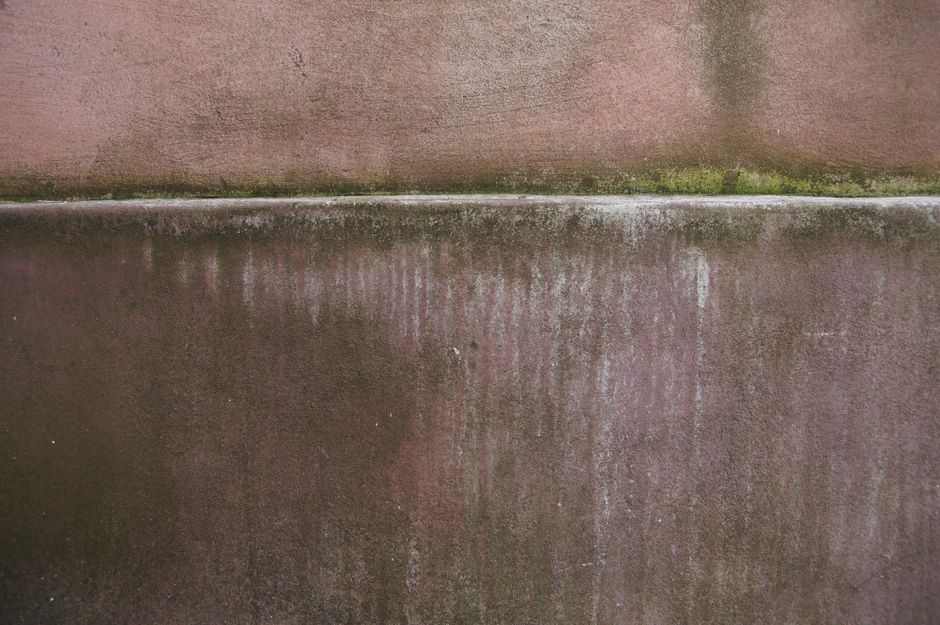
That is the quiet damage we see most often along this coast: a property that was "fixed" two or three times, each fix making the next one more expensive.
Key takeaways
The short version, before we get into the detail.
- Rising damp in Ayia Napa is driven by ground moisture and salt, not by a paint or skirting failure.
- Sealing over the tide mark traps moisture and pushes the damage higher up the wall.
- The real fix starts at ground level — basements, slabs, plinths and the wall-to-ground junction.
- We diagnose the actual source, document defects for insurers, and oversee vetted contractors.
- Every job is backed by our 10-year workmanship guarantee, across Ayia Napa and Cyprus.
What rising damp actually is
Rising damp is groundwater being drawn up into a wall by capillary action — the same effect that pulls coffee into a sugar cube. It climbs through the pores in concrete, blockwork and render until gravity and evaporation balance out, usually somewhere between half a metre and a metre above floor level. That is the famous tide mark.
What people forget is what the water carries with it. Dissolved chlorides, nitrates, sulphates — salts already present in the ground, and along the Ayia Napa coastline, plenty of them. The water eventually evaporates out of the wall face. The salts do not. They crystallise inside the plaster, blow the paint off in fine powder, and keep attracting fresh moisture from the air long after the original source is dealt with.
That is why a wall can look damp on a dry day. The salts are doing the work.
Why Ayia Napa walls are particularly exposed
There is nothing mystical about it. The conditions here line up against you.
Much of the building stock went up quickly during the resort years, and a continuous damp-proof barrier at the base of the wall was — politely — not always a priority. Slabs were poured straight onto ground. Plinths were rendered over without a break. Planters were built tight against external walls with no separation between the soil and the structure behind it.
Then there is the water table. Ayia Napa sits close to the sea, and ground moisture is rarely far below the surface, especially after the first November rains arrive all at once and the dry soil refuses to absorb them. The water has to go somewhere. A lot of it goes sideways, into the foundations of every building it can find.
And the air itself is working against you. Salt-laden coastal air keeps the wall faces hygroscopic — meaning they pull moisture out of the atmosphere on humid days. That is why holiday villas closed up for winter often look worse in February than they did in October, even though nobody has been near them.
If you want the broader picture of how this plays out in Cyprus stock, we wrote about it here: Damp and Leaks in Cyprus Villas: What's Really Going On.
What it quietly turns into if you leave it
This is the part owners underestimate. Rising damp is slow, and slow problems get postponed.
The first casualties are cosmetic — blown plaster, soft skirting, paint that no longer takes. Annoying, but liveable. Then the timber starts to go: door frames at the base, built-in wardrobes, the bottom of staircases. Electrics on ground-floor circuits become unreliable as moisture finds sockets and back-boxes set into the affected walls. In a villa with stone or marble floors, the bedding mortar under the slabs starts to lose its grip and tiles begin to lift at the perimeter.
The structural layer is next, and it is the one nobody wants. Reinforcement inside the concrete plinth corrodes, expands, and spalls the surface off in flakes. Once that begins, you are no longer waterproofing a wall — you are repairing structure. That is a different conversation.
For complexes and apartment buildings, the consequences scale. A basement car park with damp creeping up the columns, a lift pit that holds water, a plant room where the switchgear sits in a humid corner — these are not future problems. They are insurance claims waiting to be written.
Reading the wall — warning signs and where to look
Before the table, a note. The signs below are typical, not absolute. We have seen all of them mimicked by other failures — a slow plumbing leak behind a kitchen unit, a planter overflowing into a cavity, a flat-roof outlet sending water down inside the wall instead of out. That is exactly why diagnosis matters more than the symptom.
| Warning sign | Likely cause | Where we inspect |
|---|---|---|
| Tide mark 0.5–1.0 m up an internal wall | Classic rising damp through the plinth | Ground-level wall-to-slab junction, external plinth, adjacent soil or paving |
| White powdery bloom (salts) on lower wall | Hygroscopic salts left by evaporating groundwater | Render, plaster behind skirting, external face of the same wall |
| Skirting soft, paint blistering near floor | Sustained moisture in the bottom 300 mm | Floor slab edge, screed, any abutting planter or terrace |
| Damp patches at the base of an external corner | Water tracking along a foundation or planter | External landscaping, drainage falls, plinth detail |
| Musty smell in a closed-up ground-floor room | Trapped moisture behind finishes | Wall cavities, floor-to-wall junction, basement above if applicable |
| Lifting tiles at the perimeter of a room | Moisture in the bedding mortar | Slab edge, perimeter waterproofing, terrace or pool deck above or beside |
If you have seen any of these and quietly decided to deal with it next year, that is the moment to stop reading and book a site visit. Rising damp does not get cheaper to ignore.
How WATERPROOFED.cy resolves it
We do not arrive with a single product in mind. That is the first thing to understand. Anyone who quotes you a fix before they have read the building is selling you a guess.
Our process is deliberate, and it is the reason owners in Ayia Napa stop the cycle of patch-repaint-patch with us.
Diagnosis first. We map moisture across the affected walls and the areas connected to them — basements, sub-structures, terraces above, planters beside. We look at the wall-to-ground junction in detail, because that is almost always where the answer is. We work out whether you are dealing with true rising damp, lateral penetration from adjacent ground or landscaping, a hidden plumbing or drainage defect, or — frequently — two of those at once.
A written specification. Once we know what is happening, we write down exactly what needs to be done, in what order, and to what standard. The areas we cover include roofs and flat roofs, walls and facades, terraces, verandas and balconies, ground-level areas, basements and sub-structures, swimming pools, planters, wet rooms and exposed concrete. Rising damp jobs almost always involve more than one of those — the wall is rarely the only thing that needs attention.
A defect report you can use. Every diagnosis produces a documented report. Photographs, moisture readings, locations, causes, recommended works. If the damage is something your insurer should be looking at, the paperwork is already in a form they will accept. Owners of complexes and managed buildings find this particularly useful — it ends the argument about who is responsible for what.
Oversight on site. We do not hand you a report and disappear. We oversee vetted contractors through the work, check the detailing as it goes in, and sign off only when the job matches the specification. This is the part that separates a real repair from a cosmetic one, and it is the reason we can stand behind a 10-year workmanship guarantee on every job we deliver.
The waterproofing approach itself — the materials, the system, the sequence — is chosen for your building, not pulled off a shelf. A ground-floor villa wall sitting against a planted bed is a different problem from a basement column in a coastal complex, and pretending otherwise is how owners end up paying twice.
A short detour into what rising damp is not
We see two misdiagnoses constantly in Ayia Napa, and they cost owners real money.
The first is condensation. A bedroom wall that goes black with mould in winter is usually condensation, not rising damp — the pattern is wrong, it appears high and in corners, and it tracks cold bridges rather than the floor. Treating it as rising damp will not help.
The second is a slow envelope leak. A wall fed by a failed terrace above, a cracked balcony upstand, or a roof outlet leaking down through a cavity can produce a damp band that looks deceptively like a tide mark. We covered that pattern in Water Leak Repair Ayia Napa: What the Salt Air Hides and Roof Leak Repair Ayia Napa: Why the Bucket of Sealant Fails. If a previous "rising damp" repair did not hold, this is often why.
The ceiling tells a story too — see Ceiling Water Stains Ayia Napa: What's Quietly Failing if the marks are appearing overhead as well as low down.
Diagnosis is the difference between fixing the wall and chasing it.
Get an honest answer about your walls
If you would rather know than guess, get an instant estimate on the homepage, or book a site visit and we will tell you what is actually happening behind the paint.
Frequently asked questions
How do I know it's rising damp and not a leak from somewhere else?
Rising damp has a recognisable signature: a tide mark roughly half a metre to a metre up the wall, salt bloom on the surface, blistering paint near the floor, and skirting that feels soft to the touch. A leak from a pipe or roof usually shows higher up or in patches that don't track the floor line. The only way to be certain in Ayia Napa is moisture mapping and a proper on-site diagnosis.
Why is rising damp so common in Ayia Napa specifically?
A lot of Ayia Napa stock was built quickly during the resort boom, often without a continuous damp-proof barrier at ground level. Add a high water table near the coast, salt-loaded air, and slabs that sit hard against bare ground or planters, and the conditions for rising damp are practically built in. It's not bad luck — it's a detail that was skipped.
Will repainting with anti-damp paint solve it?
No. Anti-damp paint changes how the surface looks, not what the wall is doing behind it. Moisture and dissolved salts keep climbing, and within a season or two the same tide mark returns — usually higher than before. We treat anti-damp paint as a cosmetic delay, not a repair.
Does rising damp affect apartment buildings and complexes, or just villas?
It affects both, and the consequences for buildings and complexes are often worse. Shared ground-floor walls, basement car parks, plant rooms and lift pits in Ayia Napa complexes are common entry points, and the damage spreads through shared structure before any single owner notices. We work on villas, mansions, apartment buildings and complexes across the island.
How long does the work take, and is the property usable during it?
Most rising damp work is staged so the property stays usable, though ground-floor rooms along the affected wall will be out of action for a stretch. Timelines depend on what the diagnosis turns up — a single villa wall is one thing, a complex's basement perimeter is another. We give you a clear programme before anything starts.
Is the work guaranteed?
Yes. Every job we deliver is backed by our 10-year workmanship guarantee, and the defect report we produce during diagnosis is written so it stands up with insurers if you ever need it. That combination is the point — done properly, once, with paperwork to prove it.
Settle it properly, once
Most Cyprus buildings and villas are not waterproofed. We fix that — and we do it for owners and managers who would rather solve the problem than manage it forever. If your Ayia Napa property is showing the signs above, book a site visit and we will diagnose it, write you a clear specification, document the defects for your records, and oversee the work through to a finish that holds. Or message us on WhatsApp if you want a faster first conversation. Either way, the job carries our 10-year workmanship guarantee — and that is how it should have been done the first time. For broader context on how this work sits within a whole-building approach, Villa Waterproofing Cyprus: What Owners Don't See is worth ten minutes of your time.