Someone always suggests painting over it. A fresh coat on the balcony soffit, a bit of filler pressed into the crack, maybe a tube of sealant along the drip edge — and for a season it looks handled. It isn't. Rebar corrosion and concrete cancer in Nicosia don't live on the surface. They live behind it, in the steel skeleton of the building, and every cosmetic patch traps the moisture that's feeding the problem. The rust keeps expanding. The concrete keeps splitting from the inside. You've simply bought silence, not a repair.
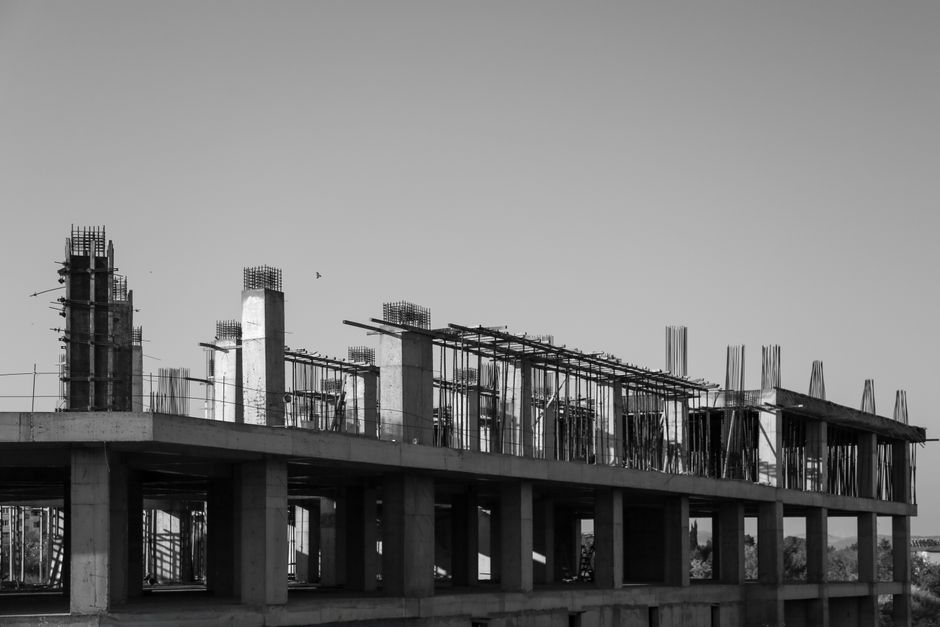
Key takeaways
What every Nicosia owner should understand before touching a rusted slab or stained soffit:
- Rust bleed, hairline cracks and flaking concrete mean the reinforcing steel is corroding — the surface is the symptom, not the disease.
- Nicosia's climate cycle of extreme dry heat and sudden autumn deluges drives water deep into porous concrete and accelerates the reaction.
- Any patch that seals moisture in — paint, render, filler over an untreated area — makes the corrosion worse and buys you months, not years.
- The fix starts with diagnosis of where water is entering and how far the damage has travelled, then a written specification and supervised execution.
- Every job we oversee carries a 10-year workmanship guarantee, on villas, mansions, apartment buildings and complexes across the capital.
What is actually happening inside the concrete
Reinforced concrete is a partnership. The concrete handles compression, the steel handles tension, and a thin alkaline layer around the rebar keeps it from rusting. That partnership holds for decades — as long as the concrete stays intact and reasonably dry.
Once water gets in, chemistry takes over. Moisture carrying carbon dioxide, chlorides or airborne salts reaches the steel and neutralises its protective layer. The rebar begins to oxidise. Rust occupies several times the volume of the original steel, so as it grows it pushes outward with genuinely destructive force. First a hairline crack. Then a rust-coloured tear on the underside of a balcony. Then a piece of the cover concrete lets go and falls.
That's concrete cancer. It's not a metaphor — it spreads, it accelerates, and it hollows out the load-bearing capacity of the element it's inside. A column losing 20% of its effective steel cross-section is no longer the column the engineer designed.
Why Nicosia buildings suffer more than owners think
The capital gets treated as the "dry" city. It isn't, in the way that matters here. Nicosia's problem is the swing — long, punishing summers that dry concrete out and open its pores, then a first November rain that arrives all at once and saturates everything for days. Water pushes in through every micro-crack and every unwaterproofed slab edge, then the heat drives it back out through evaporation, pulling salts and minerals through the matrix on the way. That cycle, repeated for years, is a corrosion engine.
Add the building stock itself. A lot of Nicosia's mid-century and boom-era construction was fast — bare concrete frames, thin cover over the rebar, minimal waterproofing at balconies, parapets and roof slabs. Newer developments aren't automatically safer; ambitious cantilevers and exposed architectural concrete give water more edges to attack.
And there is the local habit of deferring. The stain gets noticed in December, ignored by February, forgotten by summer, remembered next November when it's bigger. If that sounds familiar, the underlying pattern is the same one we describe in Damp and Leaks in Cyprus Villas: What's Really Going On — a slow problem treated as a seasonal one.
What ignoring it actually costs you
Not in euros. In outcomes.
First, the concrete cover starts to fall. Balcony undersides, soffits above entrances, the underside of a roof slab over a bedroom — these are the pieces that let go, and they let go without warning. That's a safety issue before it's anything else.
Second, the structural steel keeps losing section. Corroded rebar is weaker rebar. Cantilevered balconies, transfer beams and columns rely on that steel doing exactly what the drawings said it would. When enough of it is gone, deflections increase, cracks widen and the element has to be reinforced or rebuilt rather than repaired. The window for a clean fix closes.
Third, water follows the damage inward. The same failed edges that let corrosion begin become the entry points for leaks into apartments below — ceiling stains, blown paint, ruined joinery, and eventually the visible spalling that no owner can pretend not to see. If you're already reading tea leaves on your ceiling, Water Leak Repair Nicosia explains what those stains are really telling you.
Fourth — and this matters for anyone managing a complex or a rental — insurers become difficult. Undocumented, long-standing water damage is the easiest claim in the world to deny. A written defect report, done properly at the point of diagnosis, is often the difference between a covered event and a rejected one.
Reading the signs before they escalate
Some symptoms are obvious. Others aren't. Owners tend to underestimate the quiet ones.
| Warning sign | What it usually means | Area we inspect |
|---|---|---|
| Rust-coloured streaks weeping from a crack | Rebar behind the surface is actively corroding and staining through | Balcony soffits, slab edges, exposed columns |
| A hairline crack that reappears after every repaint | Movement or continued expansion from corroding steel below | Parapets, cantilevers, facade panels |
| A hollow sound when the concrete is tapped | Cover concrete has debonded from the rebar and is ready to fall | Ceilings, soffits, underside of roof slabs |
| Flaking paint with brown staining underneath | Moisture and rust are pushing outward through the finish | External walls, ground-floor plinths |
| Damp patches on the ceiling below a terrace | Waterproofing above has failed and water is tracking through the slab | Terraces, roof gardens, planters |
| White salt bloom around a stain | Water has been moving through the concrete for some time | Facades, basement walls, retaining structures |
If two or more of these are showing on the same building, this isn't a maintenance job any more. It's a diagnostic job.
How WATERPROOFED.cy resolves it — properly, once
We don't sell a product. We resolve a problem, and the order of operations matters more than any single material choice.
Diagnosis first. We come to the property and survey the affected areas — roof slabs, balconies, terraces, facades, columns at ground level, wet rooms, basements — and establish where water is actually getting in and how far the corrosion has progressed. Sounding, close visual inspection, tracing the path of the leak back to its source rather than its exit. Nine times out of ten the visible damage is downstream of the real cause.
A written specification. Once we know what's happening, we write a clear scope of works: what needs to be exposed, what needs to be treated, what needs to be waterproofed, and in what sequence. The best-suited approach depends on the substrate, the exposure, the movement in the element and how the water is behaving — which is exactly why we don't preach a single system. We choose the one that fits.
A defect report you can use. Every finding is documented in a report structured to be useful to insurers, management committees and future buyers. If there is a claim to be made, the paperwork exists. If there is a dispute with a developer, the paperwork exists. If you sell the building in five years, the paperwork exists.
Vetted contractors, under our supervision. We don't hand a specification to whoever is cheapest that week. We oversee execution with contractors we've worked with, on site, so what was specified is what actually gets built. This is the step most owners skip and then regret.
A 10-year workmanship guarantee. Every job we specify and oversee is backed by it. If the waterproofing fails inside that decade, we come back and put it right. That guarantee exists because we control the diagnosis, the specification and the execution — not because we're generous.
Book the diagnosis before the next rain
If you can see rust bleed, cracking or flaking on your Nicosia property, the useful next step is a site visit, not another coat of paint. You can also get an instant estimate in under a minute to understand the scope of what you're dealing with.
Why owners across Nicosia choose us
Because we do the boring things well. We diagnose before we prescribe. We write it down before we build it. We stand behind the work in writing, for a decade. And we only work on buildings, complexes, villas and premium properties — which is why we can afford to take the time each job actually requires.
Most Cyprus buildings and villas are not properly waterproofed. That's the quiet truth behind almost every rebar corrosion case we see in the capital. The buildings that don't have this problem are the ones where somebody, at some point, took the diagnosis seriously and did it once. That is the position we put our clients in — for the roof, the facade, the balcony, the basement, and every other place water has been quietly working against the steel.
Frequently asked questions
Is concrete cancer the same as rebar corrosion?
Effectively, yes. Concrete cancer is the visible damage — cracking, spalling, rust bleed — caused by the steel reinforcement rusting inside the slab or column. The rebar expands as it corrodes and pushes the surrounding concrete apart from within.
Why is this so common on Nicosia buildings specifically?
Nicosia sits inland with long dry spells followed by sudden, heavy autumn rain. Water finds every hairline crack, saturates porous concrete, then bakes in. Combined with older reinforcement placed close to the surface and years of deferred waterproofing, corrosion becomes almost inevitable.
Can I just repaint or plaster over the rust stains?
No, and doing so usually makes it worse. Paint and skim seal moisture against the steel and hide the progression of the damage. Within a season or two the same stains reappear, often with fresh cracks around them, and the structural loss underneath has continued the whole time.
How do you diagnose it without tearing the building apart?
We start with a controlled visual and physical survey of the affected areas — soffits, balcony edges, columns, roof slabs — mapping cracks, sounding for hollow zones and identifying where water is actually entering. We document defects in a report suitable for insurers before any repair is specified.
Do you work on apartment buildings and complexes in Nicosia, or only villas?
Both. We work on villas, mansions, apartment buildings and full complexes across Nicosia and island-wide. Management committees and private owners are equally at home with how we operate.
What does the 10-year guarantee actually cover?
It covers the workmanship on every job we specify and oversee. If the waterproofing we've supervised fails within that period, we return and put it right — no argument, no fine print games.
Get it diagnosed, get it done
If there is rust bleeding through the concrete of your Nicosia building, the meter is already running. Book a site visit and we'll tell you exactly what's happening, exactly what it will take to resolve, and put it in writing. Prefer a faster first contact? Message us on WhatsApp. Either way, the work we specify and oversee is backed by our 10-year workmanship guarantee — because when we say fix it once, we mean it.