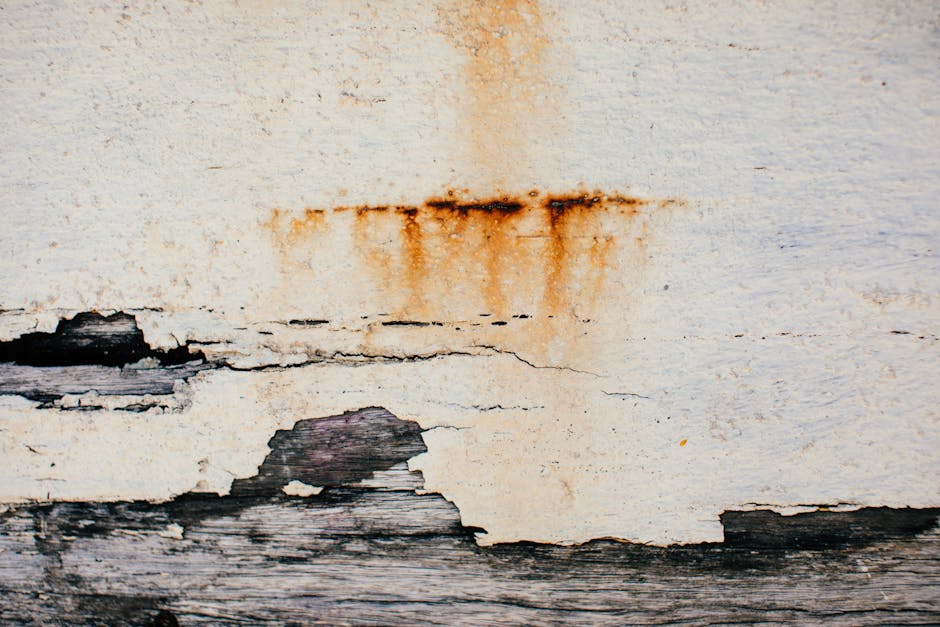
A villa above Nissi, three summers old, cream render, sea view. On the underside of the first-floor terrace, a single rust-coloured tear ran from a hairline crack down to the drip edge — no wider than a pencil. The owner thought it was dirt. Tap the soffit within a metre of that stain and the sound changes: dull, hollow, wrong. That one detail told us the steel inside the slab was already rusting, already expanding, already pushing the concrete off from the inside. That is rebar corrosion — concrete cancer — and in Ayia Napa it is almost always further along than it looks.
Key takeaways
The short version, before we go deeper.
- Rebar corrosion, or concrete cancer, is steel rusting inside the concrete; the rust expands and forces the slab apart from within.
- Ayia Napa's salt air, thin concrete cover and years of unprotected surfaces make it the default failure mode here, not a rare one.
- Rust weeps, map cracks, flaking edges and hollow-sounding soffits are early warnings — cosmetic on the surface, structural underneath.
- Sealing or painting over it without treating the steel wastes money and buys you one more season, at most.
- We diagnose the true cause, document defects for insurers, oversee vetted contractors, and back the work with a 10-year workmanship guarantee.
What concrete cancer actually is
Reinforced concrete is a partnership. The concrete handles compression; the steel bars inside handle tension. The alkalinity of fresh concrete forms a thin passive layer around each bar that keeps it from rusting. Break that chemistry and the partnership collapses.
Two things break it in Ayia Napa. Water carrying chlorides from the sea creeps through porous concrete and strips the passive layer off the steel. Airborne carbon dioxide slowly lowers the pH from the surface inward — carbonation — until the protective envelope no longer reaches the bar. Either mechanism gets the steel wet and unprotected, and steel that is wet and unprotected does exactly what steel does. It rusts.
Here is the cruel part. Rust occupies several times the volume of the original metal. As each bar swells, it pushes outward against the concrete around it, and concrete is strong in compression but weak in tension. First a hairline. Then a crack. Then a plate of concrete lets go — usually from a soffit, a balcony edge, a parapet, a column corner. By the time material is on the floor, the process has been running for a long time.
That is why the industry nickname stuck. It is not a leak, and it is not a stain. It is a slow structural disease.
Why Ayia Napa punishes concrete harder than most places
This coastline is a laboratory for the problem. A few things stack up.
Salt in the air, and in the wind. Coastal properties are bathed in a chloride mist that never really stops. It settles on parapets, works into render, drives into every hairline crack. Inland Cyprus sees this too, but the strip between Cape Greco and the harbour gets a heavier, more continuous dose.
Thin cover to the steel. A great deal of the stock here went up quickly, and the concrete cover — the layer of concrete between the surface and the nearest bar — is often shallower than it should be. Shallow cover means the chlorides reach the steel sooner. Sometimes years sooner.
Bare concrete left exposed. Roofs, parapets, terrace slabs and column heads are frequently finished and then left. No proper waterproofing, no coherent detail at the junctions, no maintenance plan. The concrete becomes a sponge. Around here, salt air quietly hides a great deal of water damage long before anyone notices a stain.
The first November rain. After a bone-dry summer, the season's first serious rain arrives all at once. Cracks that were dormant get flushed. Water sits on flat roofs that were meant to drain in minutes. The next morning, someone spots a fresh brown weep on a ceiling and assumes it is a roof leak. Sometimes it is. Often it is a bar that has been rusting quietly for two years, finally announcing itself.
The "we'll deal with it next year" habit. Owners see a stain, note it, and postpone. That is the single most expensive decision in this whole subject.
The early tells — what to look for on your property
Most failures are visible long before they are dangerous. The trick is knowing which small marks matter.
- A rust-coloured tear running down from a crack, especially on soffits, balcony undersides and column faces.
- Fine map cracking — a network of hairlines like dry mud — on renders and parapets.
- A crack that follows a straight line at a suspiciously regular distance below a slab edge. That is the line of a reinforcing bar.
- Flaking or blistering paint on a soffit, even where the wall next to it looks fine.
- A hollow, drum-like sound when you tap the concrete with the back of a screwdriver. Sound concrete rings; delaminated concrete thuds.
- Small pyramids of grey dust or thin flakes on the floor beneath a balcony, terrace or car-park ceiling.
- Exposed rebar anywhere. If you can see a bar, the clock is not starting — it has been running for years.
These signs sit close to a family of related problems: concrete spalling that has already begun to break away, ceiling stains that are quietly telling you something is failing above, or the damp and leak patterns we see across Cyprus villas. Different symptoms, same underlying story: water and steel meeting where they should not.
Warning signs, likely causes, and where we look
| Warning sign | Likely cause | Area we inspect |
|---|---|---|
| Rust weep from a hairline crack on a soffit | Chloride-driven corrosion of a specific bar | Terrace and balcony undersides, cover depth to nearest bar |
| Map cracking across a parapet or render panel | Carbonation reaching the reinforcement layer | Parapets, exposed concrete walls, render bond |
| A straight crack running parallel to a slab edge | Corroding edge bar pushing concrete outward | Slab perimeters, drip edges, cantilever balconies |
| Hollow-sounding, drummy soffit when tapped | Delamination — concrete separating from steel | Ceilings of terraces, car parks, sub-structure slabs |
| Grey flakes or dust beneath a balcony | Active spalling in progress overhead | Balcony underside, structural condition of nearby bars |
| Rust bleed on a swimming-pool coping or planter wall | Water sitting against steel with no waterproofing behind | Pool surround, planter, ground-level and wet-room details |
What it costs you to leave it alone
We do not talk in prices here. We talk in consequences.
Left alone, a stain becomes a crack. A crack becomes a delaminated plate. A delaminated plate falls — sometimes onto a car, a table, a person. The bar that was doing structural work is now half the diameter it was designed to be, and the slab it supports is no longer performing to specification. Repairs that could have been targeted and modest become large, disruptive and expensive. Finishes have to come off. Furniture has to move. Tenants and guests are displaced. Facades that were the whole point of the building are patched instead of preserved.
And then there is the insurance conversation, which owners rarely think about until they need it. If a piece of concrete falls from your building and there is no documented history of the defect and its treatment, the position you can defend is thin. If there is a written report with photographs, locations, cause and specified remedial works — and evidence that qualified oversight was in place — you have a very different conversation.
The difference between a small repair now and a structural repair later is measured in years of quiet, hidden progression. In Ayia Napa, those years pass faster than owners expect.
How WATERPROOFED.cy resolves it — properly, once
Our job is not to make the stain go away. Our job is to stop the mechanism that made the stain, restore the section properly, and protect it so the cycle does not begin again. That is a different piece of work to what most owners are quoted for.
We diagnose the real source. Before anyone touches the concrete, we assess the affected areas — soffits, balconies, terraces, parapets, columns, pool surrounds, planters, exposed concrete walls, basements and sub-structures. We look for the pattern, not just the mark. Where the water is coming from, where the chlorides are entering, how deep the cover is, how far the delamination has spread. Guesswork causes over-breakout and repeat failure. Diagnosis prevents both.
We write a clear specification. You get a written report that names each defect, locates it, explains its cause, and specifies the remedial sequence. This is the document that guides the works, that you can hand to insurers, and that a building manager or owners' committee can actually make decisions from. No hand-waving, no verbal quotes.
We select the best-suited approach for the area. Every affected zone — a balcony soffit, a pool coping, a basement wall, a parapet — has its own correct sequence. We choose it based on what the diagnosis shows, not on what is convenient to sell. We are deliberately technique-agnostic. The right answer is the one the situation calls for.
We oversee vetted contractors on site. The best specification in the world fails if the sequence is rushed or the details are cut. Our contractors are vetted, they know how we work, and we are on site to make sure the specification is what actually gets built. This is why we do not believe in the bucket-of-sealant approach that so much of the market still runs on.
We back it with a 10-year workmanship guarantee. Every job we oversee — on a private villa in Ayia Napa, an apartment building in Larnaca, a complex in Paphos or a mansion in Limassol — carries the same 10-year workmanship guarantee. That is the standard. There is no premium tier of our care; there is only how we work.
Book the site visit before the next rain
If you have seen a rust weep, a hairline crack, or a hollow patch on a soffit, the useful next step is a proper look. Get an instant estimate, or book a site visit and we will come and read the building for you.
Why we are the right people for this in Ayia Napa
Most Cyprus buildings and villas are not waterproofed. That is the plain truth of the market. We exist to fix that, on properties where the standard is expected to be high — villas, mansions, apartment buildings and complexes across Ayia Napa, Larnaca, Limassol, Nicosia, Paphos and Polis.
What you are buying, when you work with us, is not a coat of something on a wall. It is a diagnosis, a written specification, documented defects your insurer can use, vetted contractors doing the work to that specification, and a 10-year workmanship guarantee sitting behind the finished job. It is the difference between patching a symptom and resolving a problem.
We would rather do one job properly than three jobs twice.
Frequently asked questions
Is concrete cancer the same as rebar corrosion?
Yes — concrete cancer is the common name for what happens when the steel reinforcement inside concrete corrodes. The rust occupies far more volume than the original steel, so it forces the surrounding concrete outward until it cracks, delaminates and eventually falls away.
Why is it so common in Ayia Napa specifically?
Salt-laden coastal air drives chloride into the concrete, which strips away the natural protection around the steel. Combine that with fast-built structures, thin concrete cover to the rebar, and years without proper waterproofing, and corrosion becomes the default outcome rather than the exception.
Can I just paint over the rust stains on my balcony?
No. Paint hides the symptom while the steel keeps expanding underneath, and within a season or two the same stain returns with cracks beside it. The steel has to be exposed, treated and properly re-protected before any coating goes back on.
How do you know how far the corrosion has spread?
We survey visually, sound the concrete for hollow zones, check cover depth and moisture, and record every defect with photographs and locations. That produces a written report you can hand to insurers or a building manager, and a clear specification for the repair.
Will you have to break out large sections of concrete?
Only what is genuinely compromised. The goal is to remove failed concrete back to sound material, treat the exposed steel, reinstate the section and then waterproof the area properly so the cycle does not restart. Guesswork causes over-breakout; diagnosis prevents it.
What kind of guarantee do you offer on the repair?
Every job we oversee is backed by our 10-year workmanship guarantee. That covers the specification, the sequence of works and the finish — the same standard we apply to villas, apartment buildings and complexes across Ayia Napa and the rest of Cyprus.
Talk to us before the next stain becomes a plate
If your property in Ayia Napa is showing any of the signs above, the honest advice is simple: have it read properly, once, by people who do this every day. Book a site visit and we will assess the affected areas, tell you what is actually happening inside the concrete, and set out exactly what needs to be done — or message us on WhatsApp if you would rather start with a photograph and a conversation. Every job we take on is backed by our 10-year workmanship guarantee, and we would rather have that conversation now than after the next November rain.